 Skip to content

I spent a solid week going back and forth on this question, and honestly, it’s messier than I expected. Look up “candy gas daytime” and you’ll find one site calling it the perfect morning strain for focus and creativity. Scroll a little further and another site calls it a nighttime-only strain that’ll knock you flat if you use it before noon. Both of these are technically true, and that contradiction is actually the most useful thing I can tell you about this strain.
The Candy Gas strain doesn’t behave like a strain that fits neatly into one time slot. It’s not a clean, predictable sativa you smoke at 9am and forget about by lunch. It’s not a heavy indica you save exclusively for bedtime either. It’s a hybrid that changes its whole personality depending on how much you use, what phenotype you happen to have, and even what device you’re smoking it out of. That’s not a cop-out answer. It’s just how this particular strain works, and once you understand why, timing it right gets a lot easier. 🕐
This guide breaks down exactly what happens at different points in a Candy Gas high, what real users report about using it in the morning versus at night, and how to actually figure out your own sweet spot instead of guessing.
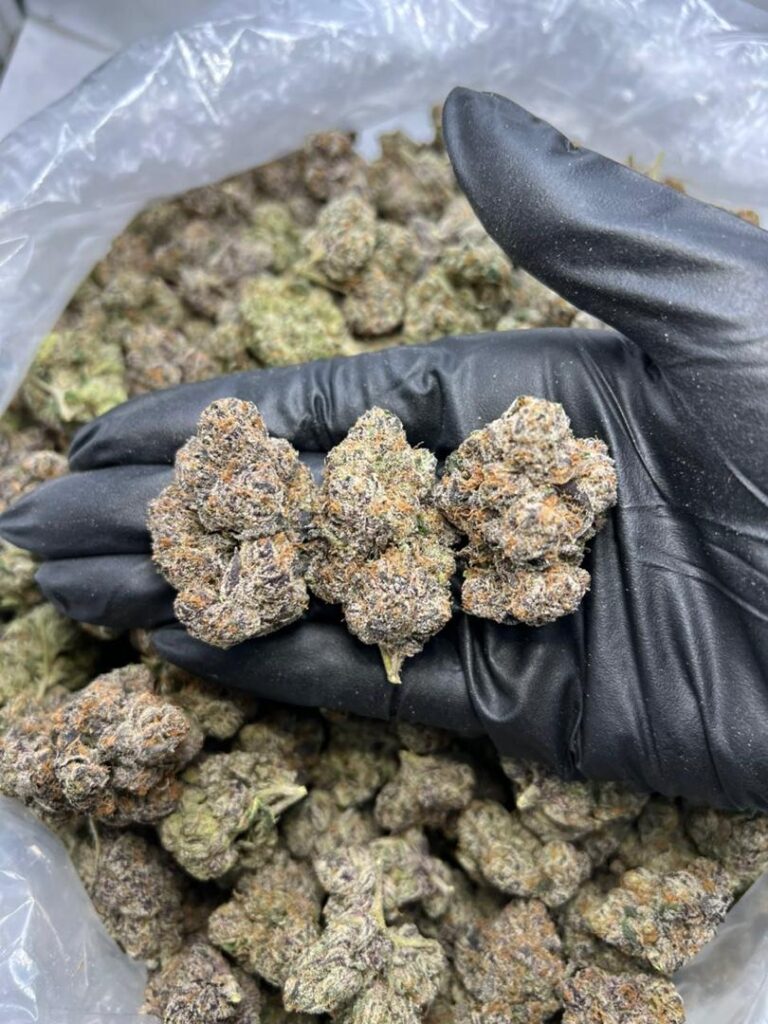
What Candy Gas Strain Actually Is, Quickly 🧬
Before we get into timing, a quick refresher for anyone who hasn’t smoked this one yet. The Candy Gas strain is a hybrid known for a sweet, fruity candy smell layered over a sharp diesel and gas funk underneath. Most sources trace it back to a Gelato 41 and Runtz cross, developed through reverse pollination by breeders at Grounded Genetics, according to Sativa University’s strain guide. Other sources point to different lineages, including a Kandy Kush and OG #18 cross bred by Crockett Family Farms, so you might see slightly different family trees depending on which cut you get.
Genetics aside, what matters most for this conversation is potency. THC testing on Candy Gas typically lands between 20% and 28%, according to Herb’s breakdown of lab data, with some batches pushing even higher. One product listing on Weedmaps showed a cart testing at 31.9% THC. That’s a huge range, and it’s one of the biggest reasons the “daytime or nighttime” question doesn’t have one universal answer. A 20% batch and a 31% batch of the same strain name can behave like two completely different products.
Why This Strain Confuses The Daytime vs Nighttime Question 🤔
Here’s where things get genuinely interesting, and where a lot of strain guides talk past each other without acknowledging it.
Some sources describe Candy Gas as an energizing daytime strain. Chronic Guru’s product page calls it a high-potency sativa delivering an uplifting, energetic high perfect for daytime creativity, and specifically recommends it for daytime or early evening use when you need energy and focus. Sativa University goes even further, suggesting you start your morning with a small dose for energetic focus, then use it through the afternoon to enhance creativity and social interaction.
Other sources describe the exact same strain as something you should save for the evening. Candy Gas Strain Clinic’s own site recommends late afternoon or evening specifically, warning that what they call “Stage 3 sedation” makes morning or midday use impractical for most people. JollyGreenLife’s review is blunt about it too, saying it’s not ideal for productivity or daytime focus unless used in very small amounts, and that plenty of user feedback describes it as a nighttime favorite.
So which is it? Based on everything I found, both camps are right, just describing different doses of the same plant. This strain runs on a curve, not a switch. Small amounts tend to land on the energizing, daytime-friendly side. Larger amounts tend to land on the sedating, nighttime side. The strain itself doesn’t change. Your dose does.
The Three-Stage High: What Actually Happens Over Time ⏱️
To understand why dose matters so much here, it helps to walk through what a Candy Gas high actually does, stage by stage, based on the pattern that shows up across nearly every review and strain guide I found.
Stage one: the mental lift. This hits fast, usually within a few minutes if you’re smoking or vaping. Herb’s review describes this opening stage as happy, social, and lightly focused. Your mood goes up, conversation gets easier, and for a lot of people, this stage feels genuinely energizing rather than sedating. This is the window that fuels all the “great for daytime” reviews.
Stage two: creative drift. As the high settles in a bit more, a lot of users report a shift toward something more introspective or creative. JollyGreenLife describes this phase as mentally soothing and slightly euphoric, with muscles starting to relax and tension starting to fade in the background. You’re still functional here, just noticeably more relaxed than stage one.
Stage three: body takeover. Given enough time, or a strong enough dose, the body relaxation stage takes over completely. Herb’s review describes this directly as a “heavier, sedating calm” that takes hold, with higher doses leaning toward sleep. This is the stage that makes nighttime-focused reviewers warn people off daytime use, and it’s also the stage that makes this strain genuinely useful for winding down or managing insomnia.
Here’s the key insight most guides miss. Not everyone reaches stage three the same way. A small dose might keep you comfortably in stage one or two for your entire session. A larger dose can blow straight through stage one and land you in stage three within twenty or thirty minutes. That’s the entire explanation for why this strain gets called both an energizing daytime pick and a heavy nighttime sedative, sometimes in reviews written about the exact same batch.
The Science Behind Why Dose Changes Everything 🔬
This isn’t just anecdotal. There’s real research behind why the same strain can feel energizing at a low dose and sedating at a high one, and it comes down to something called the biphasic effect.
A breakdown from Gotham NYC Dispensary explains that THC’s relationship to energy and motivation is biphasic, meaning it works one way at low doses and the opposite way at high doses. Research using brain imaging found that low doses of THC increase dopamine release in reward-related brain regions, while that same effect reverses at higher concentrations. A separate animal study found the same pattern showed up directly in brain activity: a low dose increased activity in certain brain regions, while a dose ten times higher suppressed activity in those same regions.
In plain terms, a small amount of THC nudges your brain toward alertness and motivation. Too much, and you get the sedation most people associate with cannabis by default. The article notes that low doses, generally in the 2.5 to 5mg THC range, are where the energizing effects concentrate most reliably.
This lines up exactly with what Candy Gas reviewers describe. A small puff or two keeps you in that energized, social stage one. A heavier session pushes you past that window straight into the relaxed, sedating stage three. Same strain, same terpene profile, completely different experience, purely because of how much you took.
Doing The Actual Dose Math 🧮
It helps to put real numbers behind all this instead of just saying “a little” or “a lot,” so let’s walk through what that actually looks like with a strain testing in the 20-28% THC range.
A typical bowl pack of flower runs somewhere around 0.3 to 0.5 grams. At 25% THC, that’s roughly 75 to 125mg of total THC in the bowl, though you’re not absorbing all of that. Combustion burns off a chunk of it, and you’re typically only inhaling a portion of any single hit, so actual absorbed THC from one or two pulls off a bowl like that often lands somewhere in the 5 to 15mg range, depending on how deep you inhale and how much you actually burn through.
Remember that Gotham NYC’s research summary points to the energizing window sitting around 2.5 to 5mg of THC. That means even a couple of light pulls off a high-potency Candy Gas bowl can already be pushing past the low end of that energizing range. This is exactly why “just take a small hit” isn’t quite specific enough advice on its own, and why so many people accidentally overshoot daytime dosing with this particular strain. It’s simply stronger per pull than a lot of other flower on the market.
For vape carts, the math shifts again. A single second-long pull off a cart testing at 30% THC can deliver a noticeably concentrated dose in a very short window, since vape carts vaporize more efficiently than combustion does. This is part of why several reviewers describe carts hitting harder per pull than flower, even when the percentage looks similar on paper.
The practical takeaway: if you’re chasing that narrow energizing window for daytime use, a single small pull, waiting a full ten to fifteen minutes, and genuinely resisting the urge to take a second hit right away is a much better strategy than trying to eyeball “a little bit” from a strain running in the mid-20s or higher.
Tolerance Changes The Whole Equation 📈
Everything above assumes a fairly average tolerance, but tolerance is one of the biggest variables in how Candy Gas plays out across the day, and it’s worth being honest about how much it shifts things.
A first-time user, or someone coming back after a long tolerance break, is going to feel the effects of even a small pull far more intensely than someone who uses cannabis regularly. For this group, the “small daytime dose” described earlier might still be enough to tip into stage two or three sedation. If you’re new to cannabis or haven’t used it in months, the safest move is to go even smaller than the guidance above suggests, and to treat your first session as pure information-gathering rather than an attempt to get a specific daytime or nighttime result.
A regular user with an established tolerance needs more THC to reach the same subjective effect, which actually gives more room to work with on the daytime side. Someone with a built-up tolerance might comfortably stay in stage one territory with a dose that would flatten a first-time user completely. This is part of why experienced smokers often report Candy Gas as genuinely daytime-viable, while newer users report the opposite, even when they’re using flower from the exact same batch.
This also cuts the other way for nighttime use. A high-tolerance user chasing sedation might need a noticeably larger session to reach stage three than a lower-tolerance friend sitting right next to them. If you’ve built up tolerance and Candy Gas suddenly isn’t hitting the way it used to for sleep, that’s a tolerance issue, not a sign the strain stopped working.
Sample Day Plans, If You Want A Starting Point 📋
If you’d rather have something concrete to work from than abstract advice, here’s how a cautious first attempt at each side of this might look.
A daytime test session: Wait until you have at least two to three hours of unstructured time, in case things don’t go the way you planned. Take a single small pull, whether from flower or a vape. Set a timer for fifteen minutes and genuinely wait it out before deciding on anything else. Notice how you feel: are you in that social, uplifted stage one, or already drifting toward stage two? If you’re happy where you’re at, stop there. If you want a bit more and you’re still clearly in stage one, take one more small pull and repeat the wait. Avoid anything requiring sharp focus, driving, or important decisions for at least a few hours afterward, even if you feel fine.
A nighttime wind-down session: Plan to use it roughly one to two hours before you actually want to fall asleep, not right as you’re getting into bed. Let the dose run a bit larger than your daytime test, since the goal here is reaching stage three rather than staying out of it. Dim the lights, put your phone away, and give your body permission to settle instead of fighting the sedation. If you notice you’re still fairly alert and social after thirty minutes, that’s a sign you can take a bit more, since you’re likely still in stage one or two.
Neither of these plans is a rigid formula. They’re just a reasonable starting point for the first time you’re deliberately trying to land on one side or the other, rather than just smoking and seeing what happens.
What Real Users Say, In Their Own Words 💬
Beyond the general patterns, it’s worth hearing directly from people who’ve actually smoked this strain and reported back, since the range of experiences tells its own story.
One Leafly reviewer using a half-ounce from the 7 Wonders brand, testing at 19.17% THC, described two to three bong rips putting them in “their happy place,” noting the overall smoke wasn’t harsh and that it worked as a 50/50 hybrid without much couch lock. They specifically said they could see themselves using it “whenever, day or night,” and gave it four out of five stars.
Another reviewer on the same Leafly thread described the effects coming on quick with a solid head change at first, before melting into a relaxed body high without being completely knocked out, calling it a good balance between euphoric and chill.
Over on Weedmaps, a reviewer testing a much stronger batch at 31.9% THC described the body feeling relaxed while the head stayed clear, adding it’s “good for daytime or night, depends how much you smoke.” That’s about as direct a confirmation of the dose-dependent pattern as you’ll find anywhere in the wild, straight from someone with no reason to frame it that way for an article like this one.
Compare that to the more cautious framing from JollyGreenLife’s review, which pulls from Leafly, AllBud, and cannabis forum feedback and notes that some users specifically describe it as a nighttime favorite, best saved for the end of the day. Read side by side, none of these reviewers are contradicting each other so much as describing different doses of the same plant.
Common Myths About “Daytime” And “Nighttime” Strains 🚫
A few misconceptions come up constantly around this whole topic, and they’re worth clearing up directly.
Myth: sativa always means daytime, indica always means sleep. This is the most common shorthand people use, and it’s not entirely wrong, but it’s a rough generalization rather than a rule. Candy Gas itself is a great example of why. Depending on the source, it gets classified as sativa-leaning, indica-leaning, or a straight 50/50 hybrid, and every version of that classification still shows the same dose-dependent behavior. The sativa-versus-indica label tells you a little about the general lean, but dose and terpene ratio matter more for predicting the actual experience.
Myth: a strain’s effects are fixed and consistent every time. Between phenotype variation, grower differences, and curing quality, no two batches of Candy Gas are guaranteed to behave identically, even with a similar THC percentage on the label. Treating every new jar as a fresh unknown, at least for the first session, saves you from assuming last month’s timing still applies.
Myth: if it’s strong, it’s automatically better. A lot of people chase the highest THC percentage available, assuming that’s the mark of quality. For daytime use specifically, that instinct works against you. A strain testing at 31% is going to blow through the energizing window much faster than one testing at 20%, meaning you actually have less control and a smaller usable dose range to work with, not more.
Myth: smell and flavor tell you how strong something is. Candy Gas is a perfect example of why this doesn’t hold up. It smells and tastes like dessert, which makes it easy to underestimate. Several reviewers specifically call out getting hit harder than expected because the sweet flavor didn’t match their mental model of a “strong” strain. Always check the lab number, not just the smell test.
How Growing And Curing Affect The Final Timing Profile 🌱
If you’re curious why timing behavior varies so much even within the same strain name, some of it traces back to how the plant was grown and cured, not just genetics.
JointCommerce’s strain guide notes that Candy Gas structure and coloring varies by phenotype, with indica-leaning cuts showing tighter internodes and chunkier colas, while sativa-leaning expressions stretch and stack more air. That structural difference often correlates with terpene lean too, since indica-leaning phenotypes tend to run heavier on myrcene, while sativa-leaning ones often carry more limonene and lighter, brighter terpenes.
Curing time matters as well. A slower, more careful cure tends to preserve a wider range of terpenes, including the lighter, more volatile ones like limonene that get lost quickly with a rushed dry. A batch that was rushed through curing might end up smelling and tasting fine but skew more toward whatever terpenes survive best, which are often the heavier ones like myrcene and caryophyllene. That can push an otherwise sativa-leaning phenotype toward a more sedating experience than the genetics alone would suggest.
None of this is something you can verify just by looking at a jar on a dispensary shelf, but it does explain why “the same strain hit differently this time” is such a common complaint in cannabis communities. If a specific brand or grower consistently delivers the timing profile you’re after, that consistency is worth more than chasing the highest THC number available.
How Terpenes Shape Which Direction You Lean 🌿
Dose is the biggest lever here, but it’s not the only one. The terpene mix in your specific batch of Candy Gas also nudges the experience one way or the other, and this is part of why phenotype matters so much with this strain.
Limonene, one of the dominant terpenes in Candy Gas, is tied to mood elevation and shows up prominently in strains built for daytime use, according to the Gotham NYC breakdown on cannabis and energy. A batch with limonene riding high on the terpene list is going to lean more toward that bright, uplifting stage one experience, and it’ll take a bit more to push you into full sedation.
Myrcene works in the opposite direction. Herb’s terpene breakdown specifically calls out myrcene as a big reason Candy Gas leans indica at all, describing its earthy, musky character and its reputation for relaxation. A batch where myrcene is more dominant is going to drift toward stage three faster and with less THC needed to get there.
Caryophyllene sits in the middle, contributing the peppery gas note on the exhale and playing a role in physical relaxation without necessarily knocking you out on its own. A TribeTokes breakdown on THC effects points out that a high-THC strain with significant myrcene content can produce more sedating, longer-lasting effects than a strain with the same THC percentage but a different terpene mix. That’s a direct explanation for why two jars of Candy Gas, both testing at say 24% THC, can feel completely different depending on which terpene is riding shotgun.
If you can see the terpene breakdown on your specific batch before buying, a limonene-forward profile is your best bet for daytime use. A myrcene-heavy profile is a better fit if you’re planning to use it in the evening or before bed.
Candy Gas For Daytime: What It Actually Takes ☀️
If you want to use Candy Gas during the day and stay functional, here’s what the pattern across reviews and dosing research points to.
Keep the dose small, genuinely small. We’re talking one modest inhale, not a full bowl or a heavy dab. Candy Gas Strain Review’s own dosing guidance recommends a single puff of three to five seconds, then waiting ten to fifteen minutes before considering more. That’s the range where stage one’s energizing, social effects show up without tipping into the body-heavy stage three.
Pick a lower-THC batch if you can find one. Given the wide range this strain tests at, a 20% batch is going to give you a lot more runway before sedation kicks in compared to a 28-31% batch. If daytime function matters, checking the lab number on the label before you buy is worth the extra minute.
Watch for limonene near the top of the terpene list. As covered above, a citrus-forward, limonene-heavy batch is more likely to keep you in that energized stage one zone longer than a myrcene-dominant one.
Give yourself a real gap before anything that needs focus. Even in the best-case scenario, stage one doesn’t last forever. If you’ve got something requiring sharp attention two or three hours after you smoke, plan around the fact that stage two or three might have kicked in by then.
Consider vaping over combustion. Vaping flower at a lower temperature tends to preserve the lighter, more energizing terpenes like limonene, while smoking at full combustion temperature can push flavor and effect more toward the heavier end. This isn’t a universal rule, but a fair number of users report a cleaner, less sedating experience vaping versus smoking the same batch.
A few real user reviews back this daytime-compatible window up directly. One reviewer on Weedmaps, describing a batch testing at 31.9% THC, said the body feels relaxed but the head stays clear and chill, adding that it’s good for daytime or night depending on how much you smoke. That’s about as clean a confirmation of the dose-dependent pattern as you’ll find in the wild.
Candy Gas For Nighttime: Where It Really Shines 🌙
If your goal is winding down, managing insomnia, or just want to fully relax without worrying about staying sharp afterward, Candy Gas has a real case for being one of the better nighttime hybrids out there.
Let the dose build naturally. Unlike daytime use, where you’re trying to stay under a certain threshold, nighttime use is about letting the full three-stage arc play out. A moderate to full session, especially with a myrcene-forward batch, tends to land you comfortably in that relaxed, sedating stage three by the end.
Candy Gas Strain Clinic’s own site points to this directly, noting that the deep, myrcene-driven relaxation in stage three brings the body to a state of rest that many users find more effective for sleep-onset issues than lower-THC alternatives. That’s a strong selling point if insomnia or racing thoughts at bedtime are part of why you’re looking at this strain in the first place.
SeedsHereNow’s review backs this up too, describing the strain’s calming effects as beneficial for people dealing with insomnia, thanks to how the relaxation promotes a more restful night’s sleep. If sleep is your actual goal, this is one of the more consistent benefits reported across multiple sources.
Give yourself a real wind-down window. Since stage three sedation can hit within thirty minutes to an hour depending on dose, using Candy Gas an hour or two before you actually want to be asleep tends to work better than smoking right as you’re trying to fall into bed. That gives stage one and two time to pass through naturally instead of trying to force sleep while you’re still in the social, uplifted phase.
Flower or concentrate tends to hit this stage more reliably than a light vape session. If sedation is the actual goal, a fuller session, whether that’s a full bowl, a joint, or a proper dab, gets you to stage three faster and more predictably than a couple of light puffs meant to keep you in stage one.
One Leafly reviewer described this balance well, saying the effects came on quick with a solid head change at first, then melted into a relaxed body high without completely knocking them out. That’s a pretty good description of what a moderate nighttime dose looks like in practice, relaxed enough to unwind, not necessarily unconscious.
What Happens If You Get The Timing Wrong 😅
A few honest scenarios worth knowing about before you experiment.
Too much, too early in the day. This is the classic mistake. You smoke a normal-sized bowl at 10am expecting the energizing stage one experience, and by noon you’re deep in stage three sedation, wondering why you can’t focus on anything. JollyGreenLife’s review specifically flags this, noting that Candy Gas isn’t ideal for productivity or daytime focus unless used in very small amounts. If your dose was built for an evening wind-down but you used it at breakfast, this is exactly what you’ll get.
Too little, too late at night. The opposite mistake happens too. If you take one light puff hoping for sleep support, you might just get stuck in the energized, social stage one right as you’re trying to wind down, which can actually make falling asleep harder, not easier. If sleep is genuinely your goal, don’t be afraid to let the dose build a bit more than you would for a daytime session.
Underestimating potency because the flavor is so sweet. This comes up constantly in reviews. Because Candy Gas tastes and smells like candy, it’s easy to forget you’re often dealing with THC levels in the mid-to-high 20s, sometimes higher. One Leafly reviewer joked about getting hit hard enough that autocorrect had to help finish their review. Sweet flavor doesn’t mean gentle effects with this strain, and that mismatch between expectation and actual potency is probably the single biggest reason people end up in the wrong stage at the wrong time of day.
Consumption Method Also Changes The Timing Math 🔥
How you consume Candy Gas changes not just the flavor, but how predictably you can control which stage you land in, which matters a lot for timing your use around your day.
Flower, smoked in a bowl or joint, gives you the fastest onset, usually within a few minutes, and the most direct read on how a given amount is going to hit you. This makes it easier to stop early for a daytime session or keep going for a nighttime one, since you’re getting real-time feedback.
Vaping flower at a controlled, lower temperature tends to feel a bit gentler and more precise, which a lot of users find easier to manage for daytime micro-dosing specifically. You can take a small hit, evaluate, and decide whether to continue, without the harsher combustion hit pushing you further than intended.
Vape carts vary a lot depending on whether they’re live resin or distillate based. A Weedmaps reviewer mentioned a distillate cart testing at 31.9% THC that still delivered a clear-headed, relaxed body feel, describing it as good for daytime or night depending on dose, which shows carts can absolutely be dosed carefully too, as long as you’re aware of the higher concentration typically found in cart form.
Dabbing concentrates delivers the fastest, most intense route to stage three. If your goal is nighttime sedation and you want to get there efficiently, a dab is going to be the most reliable option. It’s a poor choice for anyone trying to stay functional during the day, since the intensity makes it much harder to stop at stage one.
Edibles are worth a special mention here, mostly as a warning. Because edibles take 30 minutes to two hours to kick in, according to Weedmaps’ dosing guide, and convert to a longer-lasting, more sedating compound once processed by the liver, they’re a much riskier choice for daytime use where you’re trying to stay in stage one. The delayed onset makes it easy to think nothing’s happening, take more, and then get hit with a much stronger, more sedating wave later than expected. If you’re set on trying an edible version of Candy Gas for daytime use, go smaller than you think you need to, and wait the full two hours before deciding whether to take more.
Building Your Own Personal Daytime/Nighttime Map 🗺️
Since dose, phenotype, and method all shift the experience, the most useful thing you can do is treat your first few sessions with a new batch as data collection rather than assuming you already know how it’ll go.
Start with a genuinely small amount, whether that’s flower, vape, or cart, and track roughly how long stage one (the social, uplifted phase) lasts before you notice stage two creeping in. This window is different for everyone, and it’s different across batches of the same strain, so don’t assume your last jar’s timing applies to a new one.
Note what time of day you used it and how you actually felt an hour or two later. If your goal was daytime function and you found yourself sedated by early afternoon, that’s useful information about either your dose or that particular batch’s terpene lean, not a reason to swear off daytime use of the strain entirely.
Pay attention to which phenotype or brand consistently gives you the effect you’re after. Since Candy Gas covers such a wide range of actual genetics and terpene ratios depending on grower, some batches are simply going to run more energizing and some are going to run more sedating, independent of dose. Once you find a grower or cut whose Candy Gas consistently matches what you’re looking for, stick with it rather than restarting the guesswork with every new jar.
Who This Strain Works Best For, By Time Of Day 🎯
Daytime candidates: people with an established THC tolerance who know how to stop at a small dose, anyone chasing mild creative or social uplift without needing to stay razor sharp, and people who’ve found a limonene-forward batch that reliably keeps them in stage one. This is a much rougher fit for total beginners or anyone who needs to drive, operate machinery, or stay fully alert shortly after using it. Chronic Guru’s own product guidance explicitly warns against driving or operating machinery after use, regardless of the time of day.
Nighttime candidates: anyone dealing with sleep-onset trouble, end-of-day stress, or general tension who wants a strain that reliably delivers a full body wind-down. People managing chronic pain also show up frequently in reviews describing evening use, since the same relaxation that helps with sleep tends to ease physical tension too, according to SeedsHereNow’s review covering the strain’s reported pain-relief benefits.
Either, depending on dose: this is genuinely most people, based on how the reviews actually read. The Weedmaps reviewer who said it works for daytime or night depending on how much you smoke is describing the most accurate general rule for this strain. It’s less about picking a lane permanently and more about adjusting your amount to match whatever part of the day you’re in.
How Candy Gas Compares To Strains Built For One Time Slot 🆚
It helps to see this strain next to options that don’t carry the same daytime-or-nighttime ambiguity.
A strain that’s purely sativa-dominant with a light, low terpene density tends to stay in that energized, social zone across a much wider dose range, since there’s less myrcene pulling it toward sedation even at a full dose. These strains are more forgiving for daytime use because you don’t have to be nearly as careful with your amount.
A strain that’s purely indica-dominant with heavy myrcene content tends to head toward sedation fast, even at a small dose. These are more predictable for nighttime use since there’s very little risk of accidentally staying in an energized state when that’s not what you wanted.
Candy Gas sits in the middle of both of these, which is exactly why it can do both jobs but requires more attention to dose than either extreme. That flexibility is a real advantage if you like having one strain that covers multiple situations, but it does mean you can’t just grab it and go without thinking about how much you’re using and what time it is.
Other Factors That Shift Your Timing Window 🍽️
Dose and terpenes get most of the attention, but a handful of everyday factors change how fast you move through the three stages too, and they’re worth knowing about before you plan a session around a specific time of day.
Food in your stomach. Using cannabis on an empty stomach tends to bring on effects faster and sometimes more intensely than using it after a meal. If you’re trying to stay carefully within stage one for a daytime session, smoking on a completely empty stomach makes that harder to control, since the onset feels sharper and quicker. A light meal beforehand can actually make daytime dosing more predictable.
Hydration. Dehydration tends to make any THC effects, including anxiety-adjacent ones like a racing heart or mild dizziness, feel more pronounced. Candy Gas Strain Review’s own guidance specifically recommends staying hydrated throughout a session to keep things comfortable, and this matters just as much for a daytime micro-dose as it does for a full nighttime session.
Sleep debt. If you’re already running on very little sleep, cannabis in general tends to hit the sedating side harder and faster, since your body is already primed to want rest. A small daytime dose that would normally keep you in stage one might tip you into stage two or three a lot faster if you’re exhausted going in. This is worth factoring in on days when you know you’re already running low on sleep and still want a light, functional daytime session.
Stress level going in. Similar to the tolerance point above, using cannabis when you’re already anxious or stressed can shift things in a less predictable direction. A calm baseline tends to make the biphasic energizing window easier to land in cleanly, while a stressed or overstimulated baseline can push the same dose toward a more scattered or uncomfortable result instead of the clean, social lift most daytime users are after.
Room temperature and environment. This one’s easy to overlook, but a warm, comfortable environment supports the relaxation phase more easily, which is part of why nighttime sessions in a cozy, dim room tend to reach stage three more smoothly than the same dose used somewhere bright, loud, or cold. If you’re deliberately trying to wind down at night, setting the environment up in advance, lower lights, comfortable temperature, phone away, genuinely helps the strain do what it’s already inclined to do.
Combining Candy Gas With Your Actual Routine 🗓️
A strain guide is only useful if it maps onto how people actually live, so here’s how this plays out across a few common real-world situations.
Working from home with flexibility in your schedule. This is probably the most forgiving daytime scenario, since you have room to adjust if a small dose runs stronger than expected. A single light pull mid-morning, with a plan to simply take it easier on demanding tasks for the next hour or two if needed, is a reasonable way to test the daytime window without much downside.
A structured workday with meetings or deadlines. This is a much riskier setup for daytime use, and honestly, probably not the best context to be experimenting with a new strain or a new batch at all. If you already know your tolerance and your usual small dose reliably keeps you in stage one, a very conservative micro-dose before a low-stakes stretch of the day is one thing. Testing an unfamiliar batch right before something that actually matters is a different story, and not a great idea given how much this strain’s potency can vary.
Winding down after a stressful day. This is where Candy Gas genuinely shines, based on the volume of reviews describing exactly this use case. Letting a fuller session play out in the evening, with no obligations afterward, plays directly into the strain’s strength: a social, mood-lifting start followed by a real body wind-down.
Social gatherings, regardless of time of day. Because stage one tends to be social and talkative, moderate daytime or early evening use around friends is one of the more universally positive use cases reported across reviews. SeedsHereNow’s review specifically calls out the strain’s tendency to make users feel happy, giggly, and more sociable, which fits well with gatherings regardless of whether it’s 2pm or 9pm, as long as the dose stays moderate enough to keep things in that earlier stage.
Right before bed, expecting instant sleep. This is a common mismatch. Since stage one often shows up first with a mental, social lift, smoking immediately before trying to fall asleep can actually delay things rather than help, especially at a lower dose. Building in that hour or two buffer mentioned earlier in the sample nighttime plan gives the sedating stage three time to actually arrive before you’re trying to close your eyes.
A Quick Word On Mixing With Alcohol Or Other Substances 🚫
This deserves its own short section, since it comes up constantly in cannabis communities and directly affects timing decisions either way. Candy Gas Strain Review’s own safety guidance specifically warns against combining cannabis with alcohol, noting that mixing substances can amplify sedation and dizziness well beyond what either one would cause alone.
This matters even more for a strain like Candy Gas given how unpredictable the timing curve already is on its own. Adding alcohol into the mix doesn’t just add its own effects on top, it tends to intensify and speed up the sedating side of the THC curve too, making it much harder to predict whether you’re heading toward a mild daytime buzz or a full stage-three crash. If you’re specifically trying to dial in daytime versus nighttime timing with this strain, keeping alcohol out of the equation entirely makes your results a lot more reliable and a lot safer.
Frequently Asked Questions ❓
Can candy gas be used during the day without getting too sedated? Yes, in small doses. A single light puff, especially from a limonene-forward batch, tends to stay in the energizing, social stage of the high without tipping into heavy body sedation. Larger doses are much more likely to push you toward sedation regardless of the time of day.
Is candy gas strain better for daytime or nighttime overall? Neither, exactly. It’s a dose-dependent hybrid, meaning small amounts lean daytime-friendly and larger amounts lean toward nighttime sedation. Most reviews and guides that call it strictly one or the other are usually describing a specific dose or batch rather than the strain as a whole.
Why do some reviews call candy gas an energizing sativa and others call it a sedating indica? Because both are true depending on dose and phenotype. Low doses tend to trigger the energizing, dopamine-related effects associated with THC, while higher doses trigger the sedating, myrcene-driven relaxation. Different growers’ batches also carry different terpene ratios, which shifts the balance further.
How much candy gas should I use if I want to stay functional during the day? Most dosing guidance points to a single small inhale (three to five seconds), followed by waiting ten to fifteen minutes before deciding whether to take more. This keeps you in the earlier, more energizing stage of the high for longer.
Is candy gas good for sleep? Several sources describe it as helpful for sleep-onset issues, thanks to the deep, myrcene-driven relaxation that shows up at higher doses or later in a session. If sleep is your goal, letting the dose build a bit more than you would for daytime use tends to work better.
Does tolerance affect whether candy gas works for daytime or nighttime? Yes, significantly. Regular users with an established tolerance often have more room to stay in the energizing, daytime-friendly stage before sedation kicks in. First-time users or people returning from a tolerance break should expect even a small dose to hit harder and sedate faster.
Should I eat before using candy gas for a daytime session? A light meal beforehand tends to make the onset more gradual and predictable, which is helpful if you’re trying to stay carefully within the earlier, more energizing stage of the high. Using it on a completely empty stomach can make effects come on faster and feel more intense.
Why did the same batch of candy gas feel different on two separate days? Factors like sleep debt, hydration, stress level, and how much you ate beforehand all shift how quickly you move through the stages of the high, even with an identical dose. This is normal and part of why it’s worth treating each session as its own data point rather than expecting perfectly identical results every time.
Final Thoughts 🍬🌙
Candy gas daytime use isn’t off the table, and neither is nighttime use. This strain earns its reputation as a genuinely dose-dependent hybrid, one that can hand you a bright, social afternoon or a fully relaxed, sleep-ready evening depending almost entirely on how much you take and which batch you’re working with.
The mistake most people make isn’t picking the wrong strain. It’s assuming one dose fits every time of day. Start small if you’re chasing daytime function, let it build if you want the full wind-down, and pay attention to your own reactions along the way instead of trusting a label that just says “hybrid” and calling it a day. Once you find your own rhythm with this strain, the daytime versus nighttime question basically answers itself.
This article is for informational purposes only and isn’t medical advice. Cannabis affects everyone differently, and driving or operating machinery after use isn’t safe regardless of dose or time of day. Check your local laws before purchasing or using any cannabis product, and always start low and go slow, especially with a high-THC strain like this one.
