 Skip to content

I want to start with something a lot of strain write-ups skip over. Candy Gas has this reputation as a chill, mood-lifting hybrid, the kind of jar people reach for after a long day. And for a lot of people, that reputation holds up. But if you search around long enough, you’ll also find a second, quieter thread running through the reviews. Some people say Candy Gas anxiety showed up out of nowhere, right in the middle of a session that started off great.
Both of those things are true at the same time. That’s not a contradiction. It’s actually the whole story, and it’s the part most strain pages leave out because it’s easier to sell a strain as “calming” than to explain why the same jar can calm one person down and spin another person up. 🌀
So this isn’t going to be another rundown that just tells you Candy Gas is relaxing and leaves it there. I want to actually get into why anxiety shows up the way it does with this strain, what the research says about THC and anxiety in general, what real users report, and how you can stack the odds in your favor if you’re curious about trying it. Let’s get into it. 🍭
A quick note on where I’m coming from with this one. I’ve spent a lot of time reading through strain databases, cannabis forums, and the actual research on THC and anxiety, and the thing that struck me is how rarely anyone connects the dots between the two. Strain pages talk about effects like they’re fixed properties of the plant. Research papers talk about dose-response curves like they have nothing to do with any specific strain. Nobody sits in the middle and says “here’s how these two things actually meet in the real world, with a real jar, in your actual hands.” That’s what I’m trying to do here. 🔍
What Is Candy Gas Strain? A Quick Refresher
Before we get into the anxiety side of things, let’s make sure we’re on the same page about what Candy Gas Strain actually is.
Candy Gas is a hybrid, and depending on which source you trust, it’s either a cross of Kandy Kush and OG #18 bred by Crockett Family Farms, or a cross of Gelato 41 and Runtz bred by Grounded Genetics. We’ll get into that whole debate in a minute, because it actually matters for understanding the effects. What everyone agrees on is the flavor: a candy-sweet front end that gives way to a heavy, funky, diesel-like exhale. Hence the name.
THC levels typically land somewhere between 20% and 28%, with a lot of batches sitting in the mid-20s. That’s a genuinely strong strain by most standards, and it’s a detail that’s going to matter a lot once we start talking about anxiety, because potency and anxiety risk are tied together more tightly than most people realize.
Effects-wise, Candy Gas is usually described as starting with a euphoric, social, talkative head high, then easing into body relaxation as time goes on. Most sources lean toward calling it indica-dominant or a balanced hybrid with an indica lean, which lines up with that mellow back half of the experience.
The Genetics Debate: Two Origin Stories, One Strain Name
Here’s something worth knowing if you’re the type who likes to understand what you’re actually smoking. There isn’t full agreement on where Candy Gas Strain came from.
One camp traces it to Crockett Family Farms, crossing Kandy Kush with OG #18. This version leans into the “gas” side of the name a bit harder, with that classic OG diesel funk sitting underneath the sweetness.
The other camp points to Grounded Genetics, who reportedly reversed a Gelato 41 cut (itself a Thin Mint GSC x Sunset Sherbet phenotype, sometimes called Bacio Gelato) to pollinate a Runtz mother. That approach locks in Gelato’s potency and creamy flavor while layering Runtz’s candy sweetness and colorful bud structure on top.
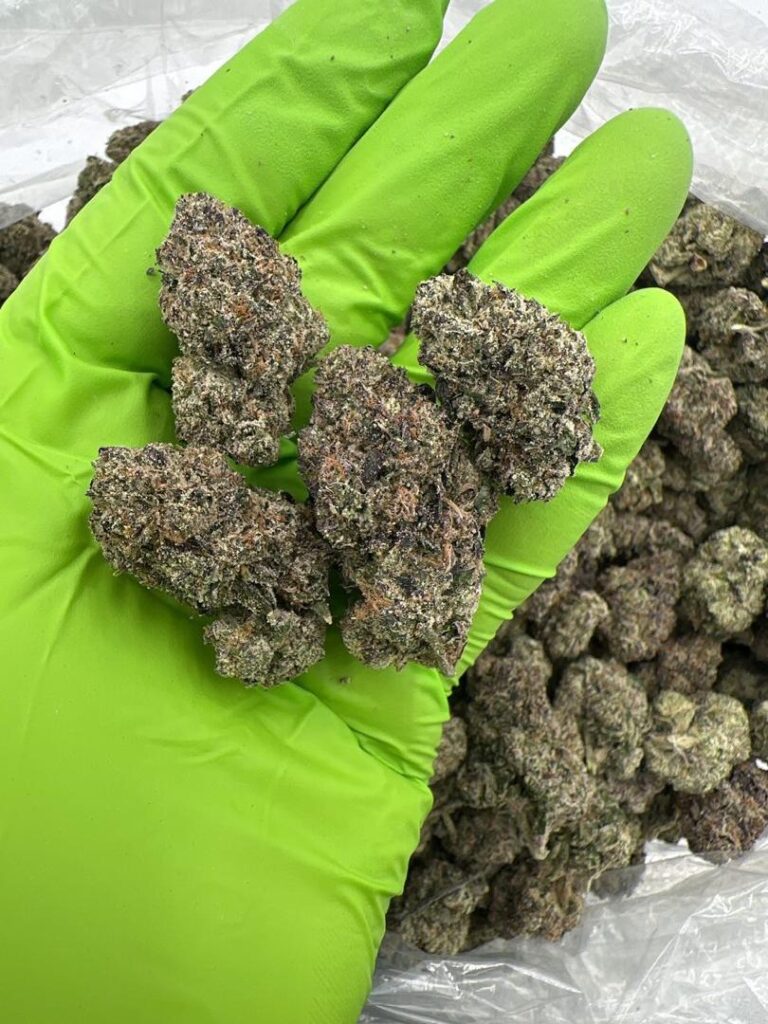
Neither side is wrong exactly. Cannabis genetics get passed around, renamed, and re-crossed so often that “Candy Gas” has basically become a flavor category as much as a fixed genetic line at this point. Some breeders even use the name as a catch-all label for sweet-over-gas hybrids that share a similar vibe rather than an identical family tree. What this means practically is that the jar labeled Candy Gas Strain at one dispensary might not be genetically identical to the one at a shop across town, and that variation is part of why anxiety reports are all over the map too. Different phenotypes, different terpene ratios, different reactions.
It’s worth sitting with that for a second, because it changes how you should read strain reviews in general, not just for this strain. When someone says “Candy Gas gave me anxiety” and someone else says “Candy Gas is the most relaxing strain I’ve tried,” there’s a real chance they weren’t even smoking genetically identical flower. One might have gotten a Crockett Family Farms cut with more of that sharp OG diesel influence pushing THC and intensity higher. The other might have had a Grounded Genetics phenotype with more Gelato-driven creaminess and a gentler come-up. Same name on the label, two different plants underneath it.
This is actually pretty normal in the cannabis industry, and it’s not unique to Candy Gas Strain. Names travel faster than genetics do. A cut gets popular, other growers hear the name, and they start crossing their own strains and calling the result by that same catchy name because it sells better than a string of genetic codes would. It’s good marketing and confusing science at the same time.
Terpene Profile: The Part That Actually Explains the Anxiety Question
If you want to understand candy gas anxiety, terpenes are where the real answer lives, not just the THC percentage on the label.
Candy Gas is consistently described as having a terpene backbone built on three main players: caryophyllene, limonene, and myrcene. Some phenotypes also carry meaningful linalool. Here’s what each one actually does. 🧪
Caryophyllene is the terpene responsible for that peppery, spicy-fuel edge that gives Candy Gas its “gas” half. It’s also the only terpene known to bind directly to CB2 receptors, which are part of the body’s endocannabinoid system tied to inflammation and stress response. Some research has pointed to caryophyllene having anxiety-reducing properties independent of THC, which is a big deal for a strain this potent, since it means the terpene profile might be working against the anxiety risk that comes with high THC.
Limonene brings the bright citrus note and is one of the more talked-about terpenes when it comes to mood. It’s associated with elevated mood and stress relief in a lot of anecdotal and early research, and some people believe it helps “smooth out” the sharper edges of a high-THC high.
Myrcene adds the earthy, herbal base note and is linked to sedation and relaxation. In higher concentrations, myrcene is part of why Candy Gas tends to mellow out into body relaxation rather than staying purely heady the whole session.
Linalool, when present, adds a floral note and is one of the few terpenes with fairly solid research behind it for anxiety relief specifically, since it’s the same compound found in lavender.
Put together, you’ve got a terpene profile that, on paper, should buffer some of the anxious edge that comes with a 25%+ THC strain. And for a lot of users, it does exactly that. But terpene content varies from batch to batch and grower to grower, which is exactly why you’ll find such a mixed bag of experiences when you go looking for candy gas anxiety reports online.
A Quick Detour Into How Your Brain Actually Handles This
I promise this isn’t going to turn into a biology lecture, but a little background here makes everything else in this article make a lot more sense.
Your body has something called the endocannabinoid system, or ECS. It’s a network of receptors spread throughout your brain and body that respond to cannabinoids, both the ones your body naturally produces and the ones you introduce by using cannabis. The two receptor types that matter most here are CB1 and CB2.
CB1 receptors are concentrated heavily in the brain, especially in regions tied directly to anxiety regulation: the amygdala (your brain’s threat-detection center), the hippocampus (memory and context), and the prefrontal cortex (decision-making and impulse control). THC binds to CB1 receptors, which is exactly why it affects mood, perception, and anxiety so directly. It’s not a side effect. It’s the primary mechanism.
CB2 receptors are found more in the immune system and peripheral tissues, tied more to inflammation than mood. This is the receptor caryophyllene binds to, which is part of why that particular terpene gets so much attention in anxiety-related cannabis discussions. It’s doing something a little different from THC itself, working through a separate pathway rather than directly amplifying or dampening the same CB1 activity that’s driving the anxiety response.
Here’s the part that actually explains the biphasic effect. At low doses, THC’s interaction with CB1 receptors in the amygdala tends to dampen the threat response, which reads as calm. At higher doses, that same interaction seems to overshoot, and instead of dampening the threat response, it starts amplifying it, which reads as anxiety or even panic in some cases. Researchers still don’t have a perfectly clean explanation for exactly where that tipping point sits, because it moves around based on tolerance, genetics, and even sex differences that show up in some of the animal research. But the pattern itself, calm at low doses, anxious at high doses, is one of the more consistently replicated findings in cannabinoid research. 🧠
Why does this matter for Candy Gas Strain specifically? Because a strain testing at 25% THC gives your CB1 receptors a much bigger, faster dose per hit than a strain testing at 15% would. The margin between “calming dose” and “overshoot dose” gets a lot narrower. You’re not doing anything wrong if you find that margin hard to judge. You’re just working with a genuinely potent product that doesn’t leave a lot of room for guessing.
THC Potency: Why This Number Matters More Than People Think
Let’s talk numbers for a second, because this is the piece that ties everything else together.
Candy Gas Strain routinely tests in the 20% to 28% THC range, and craft or small-batch drops sometimes push even higher. That puts it solidly in the “high potency” tier of the market, well above what most flower looked like even ten years ago.
Here’s the thing about high THC percentages and anxiety: it’s not a straight line where more THC just means more of everything, good and bad, equally. It’s more like a dimmer switch that eventually flips the wrong direction. Research on THC’s relationship with anxiety consistently describes it as biphasic, meaning low doses tend to calm things down while higher doses can flip into the opposite effect entirely. Multiple studies show cannabis decreases anxiety at low doses and increases anxiety at high doses.
That single fact explains almost everything confusing about Candy Gas Strain reviews. Someone taking one or two small hits might feel genuinely calmer. Someone taking several bigger hits of the same jar might end up anxious, racing, or overstimulated. Same strain, same THC percentage, completely different outcome, because the dose crossed a line somewhere in between. 📉📈
The Actual Science: How THC and Anxiety Really Work Together
I think this is worth slowing down on, because most strain content skips the science entirely and just says “may help with anxiety” without explaining anything.
CB1 receptor agonists like THC show a biphasic, dose-dependent effect on anxiety, where low doses calm and high doses provoke anxious responses. This isn’t just a theory floating around online forums. It shows up in actual lab research, including animal studies looking at brain chemistry directly. One study found THC produced calming effects at very low doses and anxiety-provoking effects at a dose roughly ten times higher, with the anxious response tied to increased dopamine activity in brain regions connected to threat response.
Human research points in the same direction. A 2017 study in the Journal of Affective Disorders found that cannabis doses under 10 milligrams of THC meaningfully reduced anxiety, stress, and depression ratings, while higher doses produced less consistent results and sometimes increased anxiety instead. Other small studies looking specifically at social anxiety found something similar: 7.5 milligrams of THC helped people feel calmer during a simulated public speaking task, while 12.5 milligrams made the same task feel more anxiety-inducing. That’s a difference of just 5 milligrams flipping the entire experience.
Now, here’s where it gets tricky specifically for something like Candy Gas Strain. Milligram dosing is easy to control with an edible or a tincture. It’s a lot harder to control with flower, especially flower testing at 25%+ THC. A single deep hit off a strain this strong can deliver a meaningfully larger dose than someone intends, especially for anyone still building tolerance. That’s not a flaw specific to Candy Gas. It’s just a reality of high-potency flower in general, and it’s worth knowing going in.
There’s also an individual variability piece that research keeps circling back to. Some studies have found THC’s anxiety effects differ by sex, with clear biphasic anxiety responses showing up in female subjects but not male subjects at the same THC doses in certain animal studies. Genetics, tolerance, prior experience with cannabis, current stress levels, and even the setting you’re in when you use it all stack on top of the dose itself. Two people smoking the exact same jar of Candy Gas Strain, same amount, same day, can walk away with two completely different experiences. That’s not inconsistency in the strain. That’s just how brains work.
There’s a concept researchers and experienced users both talk about called “set and setting.” Set refers to your mindset going into a session: are you relaxed, stressed, excited, worried. Setting refers to your physical environment: are you somewhere familiar and comfortable, or somewhere new and slightly on edge. Both of these interact with dose in ways that can push the same amount of THC toward a calm outcome or an anxious one. Someone using Candy Gas Strain at home on a lazy Sunday, already relaxed, in familiar surroundings, is working with a completely different starting point than someone using it for the first time at a party, already a little nervous, surrounded by people they don’t know well. The THC hasn’t changed. Everything around it has.
This is actually backed by a decent amount of research into context-dependent drug effects more broadly, not just cannabis. The same chemical exposure can produce different subjective experiences depending on the psychological and environmental context surrounding it. It’s one of the reasons cannabis researchers increasingly push back against simple “this strain does X” framing, because the strain is only ever one variable in a much bigger equation.
Even something as simple as who you’re with can shift the outcome. Using Candy Gas Strain around people you trust, who won’t judge a quiet moment or an odd thought out loud, tends to correlate with calmer sessions than using it around new acquaintances where there’s an unspoken pressure to seem normal or entertaining the whole time. None of this shows up on a lab report, but it shows up constantly in real user experiences.
Candy Gas Anxiety: What Real Users Actually Report
Theory is useful, but let’s ground this in what people are actually saying after using this strain. I pulled through community reviews on multiple strain databases and forums to get an honest cross-section, not just the glowing five-star quotes brands like to highlight.
When It Helps
A good chunk of reviewers describe Candy Gas Strain as genuinely useful for anxiety and stress when used in moderate amounts. One reviewer described the calming effects showing up almost immediately, with a sense of ease that didn’t come with heavy drowsiness, and said it had become a regular part of managing anxiety day to day. Other reviewers describe a similar pattern: an early lift in mood, a settling into physical relaxation, and enough mental clarity left over to stay social or productive rather than getting stuck on the couch. 🛋️
Reviewers who describe positive experiences tend to mention a few things in common. They’re using it in the afternoon or evening rather than as a first-thing-in-the-morning strain. They’re pacing themselves rather than smoking a full bowl in one sitting. And a lot of them already have some cannabis tolerance built up, so the THC percentage isn’t hitting them completely fresh.
When It Backfires
On the other side, plenty of reviewers flag exactly the risk you’d expect from a strain this potent. Higher doses may lead to anxiety or paranoia in sensitive individuals, particularly those new to cannabis or prone to THC sensitivity. This warning shows up across multiple independent strain databases, not just one source repeating itself, which tells you it’s a consistent enough pattern to take seriously.
The common thread in the negative reports isn’t that Candy Gas Strain is uniquely bad for anxiety. It’s that people who are new to cannabis, already anxiety-prone, or who took more than they meant to ended up on the wrong side of that biphasic dose curve we just talked about. Racing thoughts, a spike in heart rate awareness, overthinking small details, that sense of being “too in your head,” these are the recurring themes. None of it sounds unique to this strain specifically. It sounds like what high-THC cannabis does to a sensitive nervous system in general, which is exactly what the research above would predict. 😬
The Middle Ground Nobody Talks About Enough
What almost never gets said clearly is that both groups of reviewers are probably right about their own experience. The person who says Candy Gas Strain calms their anxiety and the person who says it made their anxiety worse aren’t disagreeing about the strain. They’re describing two different points on the same dose curve, filtered through two different nervous systems, tolerance levels, and settings. That’s the actual insight buried in this whole topic, and it’s the reason a simple “does Candy Gas help with anxiety, yes or no” question doesn’t have a clean answer.
How Candy Gas Stacks Up Against Other High-THC Strains
It helps to put this in context against other strains people commonly reach for when anxiety is part of the conversation, because Candy Gas Strain isn’t operating in a vacuum.
Compared to something like a pure sativa landrace, Candy Gas tends to be gentler on the anxious, racing-thoughts front, mostly because of its indica lean and that myrcene-heavy relaxation coming in behind the initial head high. Pure sativas with less myrcene and more pinene or terpinolene can sometimes feel more stimulating in a way that tips certain users toward overthinking rather than settling down.
Compared to a CBD-dominant strain or a balanced 1:1 THC:CBD hybrid, Candy Gas is a much less predictable choice for anxiety specifically. CBD doesn’t carry the same biphasic anxiety risk that THC does, and it can actually blunt some of THC’s anxious side effects when the two are combined in balanced ratios. A strain like Candy Gas, sitting at 25%+ THC with little to no CBD, doesn’t have that built-in safety net.
Compared to other high-THC dessert-leaning hybrids like Gelato or straight Runtz, Candy Gas sits in a similar potency range but brings a heavier caryophyllene and diesel presence to the table, which some users find adds a grounding, less “floaty” quality to the high. Whether that translates to less anxiety risk in practice really depends on the individual, but it’s a meaningfully different experience from a lighter, more citrus-forward hybrid.
The takeaway here isn’t that Candy Gas Strain is better or worse than any of these other options for anxiety. It’s that potency and terpene profile both matter, and Candy Gas happens to sit at the intersection of “quite strong” and “genuinely interesting terpene profile,” which is exactly why its anxiety reports are so mixed.
My Honest Take After Looking Into This
Here’s where I’ll be straight with you instead of just repeating marketing copy. If you’re anxious and curious about trying Candy Gas Strain, the strain itself isn’t really the variable you should be most worried about. The dose is.
A strain testing at 25%+ THC gives you almost no room for error if you’re trying to land in that calming, low-dose zone the research keeps pointing to. One small hit off a joint or a light pull from a vaporizer might genuinely land you in the sweet spot where the caryophyllene and limonene are doing real work smoothing things out. A full bowl, or several hits back to back, can blow right past that zone into the territory where high-THC strains start working against you instead of for you.
If I were being asked directly, “should I try Candy Gas Strain for anxiety,” my honest answer would be: maybe, but not as your first move, and not in a big dose. If you already know how you handle high-THC flower and you tend to do fine with it, this strain’s terpene profile genuinely does have some things going for it. If you’re newer to cannabis, or you already know THC sometimes turns your anxiety up instead of down, this probably isn’t the gentle starting point you’re looking for. There are lower-THC, higher-CBD options that are a much safer testing ground before working your way toward something this strong. 🍯
Flavor Profile: What Candy Gas Actually Tastes Like
Since flavor and terpenes are so tied together with the anxiety conversation, it’s worth breaking down what you’re actually tasting, piece by piece.
The Aroma
Cracking the jar delivers an immediate wave of sweet candy, backed almost instantly by a sharp, funky gas note underneath. It’s the kind of smell that fills a room fast. Some phenotypes lean more toward a fruity, dessert-like sweetness up front, while others carry a hazelnut or musky undertone before the diesel kicks in.
On the Inhale
The inhale usually opens with that candy sweetness front and center, sometimes with a fruity or creamy note depending on the phenotype. It’s smooth going down, without much of the harsh, chemical edge you sometimes get with heavily processed products.
Mid-Smoke
As the smoke sits, the gas and diesel notes start to build, adding a spicy, almost peppery weight underneath the sweetness. This is really the caryophyllene doing its job, giving the flavor some backbone instead of staying one-note sugary.
The Exhale
The exhale tends to finish with that signature funky, fuel-like punch, lingering a bit on the back of the throat. It’s a distinctive finish, not for everyone, but it’s exactly what fans of this strain are chasing when they specifically search out Candy Gas Strain over other sweet hybrids.
What a First-Time Session Actually Feels Like
It helps to walk through what an actual session looks like moment by moment, rather than just listing effects in the abstract, because anxiety (when it shows up) tends to arrive at a specific point in the timeline rather than out of nowhere.
The first few minutes after a small hit usually bring on that candy-sweet flavor and a light, almost immediate lift in mood. Thoughts might feel a little quicker or more associative, in a pleasant, talkative way rather than a racing way. This is generally the window where things feel good for most users, low dose, early onset, mind still clear.
Somewhere between the ten and twenty minute mark, if more was used than the body was ready for, this is typically where things can shift. The head high that felt pleasant a few minutes earlier can start to feel like too much, too fast. Heart rate awareness increases. Thoughts that were pleasantly quick start to feel like they’re moving without your permission. This is the tipping point the biphasic research points to, playing out in real time rather than as an abstract concept.
For most people who stay on the lower end of their dose, that shift never happens at all. The early lift simply continues into the body relaxation phase, usually starting around the twenty to thirty minute mark, where muscles loosen, thoughts slow back down, and the overall feeling becomes calm rather than wired. This is the phase most positive reviews are describing when they talk about Candy Gas Strain being good for winding down.
The difference between a great session and an anxious one often comes down to whether someone pushed past that first window before waiting to see how it would resolve on its own. Patience, more than anything else, seems to be the deciding factor.
Dosing and Consumption Method: The Part That Actually Changes Your Odds
If dose is the real variable behind whether Candy Gas Strain calms you down or winds you up, then consumption method matters just as much, because different methods make dose control dramatically easier or harder.
Smoking flower gives you the most real-time control. You can take one hit, wait a few minutes, and gauge how you feel before deciding whether to take more. This is honestly the safest way to test your personal relationship with a high-THC strain like this one, because you’re not committed to a full dose before you know how it’s hitting you.
Vaporizing at a lower temperature works similarly, with the added benefit of preserving more of those anxiety-relevant terpenes like linalool and limonene, which can degrade at higher combustion temperatures.
Dabbing concentrates made from this strain removes a lot of your margin for error, since concentrates deliver THC in a much more concentrated, fast-acting way. If anxiety is a real concern for you, this probably isn’t the format to start with.
Edibles infused with Candy Gas genetics are the trickiest of all when it comes to anxiety, because the effects take 45 minutes to 2 hours to show up, and it’s incredibly easy to take more before the first dose has even kicked in. If you’re specifically trying to stay in that calm, low-dose zone, edibles require a level of patience a lot of people don’t have on the first try.
Across all of these methods, the same rule applies: start small, wait it out, and only add more once you actually know how the first amount is affecting you. This isn’t just cautious advice for the sake of sounding responsible. It’s a direct reflection of what the dose-response research actually shows.
Common Mistakes People Make With Strains This Strong
A few patterns show up again and again in the negative candy gas anxiety reports, and almost all of them are avoidable.
Smoking on an empty stomach. This one gets overlooked constantly. Using cannabis, especially high-THC flower, on an empty stomach tends to intensify effects and speed up onset, which can push someone past their comfortable dose threshold faster than they expect.
Chasing the first hit’s flavor with a second hit too soon. Because Candy Gas Strain tastes genuinely good, it’s easy to take another hit just to enjoy the flavor again before the first hit has fully hit you. Effects from smoking usually build over 5 to 15 minutes, so a second or third hit taken in that window can stack on top of an already-building high in a way that overshoots the intended dose.
Using it in an unfamiliar or high-pressure setting for the first time. Trying a new, high-THC strain at a party, before a social event, or in any setting that already carries some background stress is setting yourself up for a rougher experience than trying it at home, alone or with people you trust, on a low-stakes evening.
Ignoring tolerance breaks. Regular cannabis users build tolerance, which sounds like it should make things safer, but it can actually cut both ways. Some people compensate for tolerance by using more, which increases the chance of tipping into the anxiogenic zone described earlier. Periodic tolerance breaks can help keep your effective dose lower and more predictable.
Mixing with alcohol or other substances. Combining cannabis with alcohol or other substances can amplify unpredictable effects, including anxiety, well beyond what either substance would produce on its own. If you’re specifically trying to gauge how Candy Gas Strain affects your anxiety, using it on its own gives you a much clearer read.
None of these mistakes are unique to this strain. They’re just more consequential with a strain this potent, because the margin for error is smaller to begin with.
Microdosing Candy Gas Strain: A Realistic Option Worth Knowing About
If the research on low-dose THC and anxiety keeps pointing toward small amounts working better than large ones, it’s worth talking about microdosing specifically, since it’s a genuinely practical strategy for a strain this strong.
Microdosing with flower is trickier than with edibles, since you can’t measure milligrams as precisely. But there are still ways to approximate it. A single small inhale, held briefly and then released, followed by a full five to ten minute wait before deciding whether to take another, is about as close as you can get to a controlled low dose with smoked or vaporized flower. Some users use a one-hitter or a small pipe specifically because it limits how much gets consumed in a single pull, compared to a joint or a bong where it’s easier to take in more than intended.
For anyone specifically trying to land in that calmer, lower end of the dose curve, patience really is the whole strategy. The instinct after a small hit that “didn’t do much yet” is often to take another one right away, but effects from inhaled cannabis typically build over several minutes, sometimes longer depending on tolerance and lung capacity. Waiting a full five minutes before your second hit, rather than 60 seconds, gives you a much clearer picture of where that first hit actually landed you before adding more on top of it.
This approach won’t turn a 25% THC strain into a low-potency product. But it does give you meaningfully more control over where you land on that biphasic curve, which is really the whole game when anxiety is part of the conversation.
Who Should Be Cautious, and Who Might Actually Benefit
Not everyone is starting from the same place with this strain, so let’s break it down honestly.
People who might do well with Candy Gas Strain: those with existing cannabis tolerance, people who’ve used high-THC strains before without a bad reaction, and people specifically looking for an evening strain to unwind with in a calm, low-pressure setting.
People who should be more careful: anyone new to cannabis entirely, anyone who’s had a bad experience with high-THC strains before, anyone currently dealing with an anxiety disorder that hasn’t been discussed with a doctor, and anyone planning to use this strain in a high-pressure or unfamiliar setting rather than somewhere comfortable and low-stakes.
People who should probably look elsewhere first: anyone specifically seeking anxiety relief who has zero cannabis experience. There are gentler starting points, including low-THC or CBD-forward products, that let you learn your own reaction to cannabis before introducing a strain testing in the mid-20s percent range.
This isn’t medical advice, and it’s not a substitute for talking to an actual healthcare provider if anxiety is something you’re managing regularly. It’s just an honest breakdown of who tends to have a good experience with this specific strain versus who tends to struggle.
Community Reviews ⭐
Here’s a snapshot of the kind of feedback that shows up again and again across strain review platforms and cannabis forums for Candy Gas Strain.
⭐⭐⭐⭐⭐ “Genuinely helps me unwind” “I use this in the evening after work and it takes the edge off without knocking me out completely. Flavor is incredible too, tastes exactly like the name promises.”
⭐⭐⭐⭐⭐ “Balanced without being sleepy” “Stayed social and talkative for the first hour, then eased into a relaxed body feeling. Didn’t get anxious at all, but I kept my dose light on purpose.”
⭐⭐⭐ “Too strong for me at first” “Took more than I should have on my first try and got pretty anxious for about 20 minutes. Second time around I went much slower and had a totally different, way better experience.”
⭐⭐⭐⭐ “Strong stuff, respect the potency” “This isn’t a beginner strain. Loved the flavor and the head high, but I definitely felt my heart rate pick up when I overdid it. Lesson learned.”
⭐⭐⭐⭐⭐ “My go-to for stress after a long week” “Something about the sweetness mixed with that gas smell just puts me in a good mood before I even take the first hit. Low dose, chill vibes, no anxiety for me.”
⭐⭐⭐ “Mixed bag depending on the day” “Some days it mellows me right out. Other days, if I’m already stressed going in, it seems to amplify that instead of calming it. Mood going in seems to matter a lot.”
⭐⭐⭐⭐ “Better the second time around” “First jar hit me harder than expected and I got a little anxious for maybe half an hour. Bought it again a few weeks later, used way less, and it was honestly one of my favorite sessions all month. Same strain, completely different experience.”
Where to Find Candy Gas Strain
Availability shifts by state and by season, since Candy Gas Strain circulates through different growers and phenotypes rather than coming from one single, standardized seed line. Licensed dispensary menus are the most reliable place to check current stock, and because demand for this strain tends to run high, batches don’t always stick around long once they land on a shelf.
A few things worth checking before you buy: look for a Certificate of Analysis showing actual lab-tested THC and terpene percentages rather than just trusting the label, ask the budtender about the batch’s specific phenotype if they know it (Crockett Family Farms lineage versus Grounded Genetics lineage can genuinely taste and hit a little differently), and if anxiety is a concern for you, consider asking about a lower-THC batch if multiple options are available.
It’s also worth asking whether the shop has any smaller pre-packaged options available, like a gram or an eighth, rather than committing to a larger quantity right away. Since terpene ratios and effects can shift meaningfully between batches even under the same strain name, buying a smaller amount first gives you a lower-stakes way to see how a specific batch actually affects you before deciding whether to restock. This is especially worth doing if you’re specifically testing the waters on the anxiety question, since one batch’s experience doesn’t necessarily predict the next one perfectly.
Pricing for Candy Gas Strain tends to sit in the upper-mid to premium tier, generally somewhere in the $11 to $17 per gram range depending on the market and whether it’s a small-batch craft grow or a larger commercial run. Craft, carefully cured batches tend to carry more of that nuanced terpene expression that this whole anxiety conversation depends on, so it’s not necessarily the place to cut corners if flavor and effect consistency matter to you.
Frequently Asked Questions
Does Candy Gas strain cause anxiety? It can, especially at higher doses or for people new to high-THC cannabis. It can also reduce anxiety at lower doses for some people. The research on THC and anxiety describes a biphasic effect, meaning the outcome depends heavily on how much you use, not just which strain you’re using.
Is Candy Gas good for anxiety or bad for anxiety? Both, depending on the dose and the person. Community reports include plenty of people who find it calming in small amounts, and plenty who report candy gas anxiety symptoms like racing thoughts or paranoia when they take more than their body is ready for.
What THC percentage does Candy Gas strain usually test at? Most batches land between 20% and 28% THC, with a lot of them sitting in the mid-20s. That’s considered high potency, which is exactly why dose control matters so much with this particular strain.
What terpenes are in Candy Gas strain? The main terpenes are caryophyllene, limonene, and myrcene, with some phenotypes carrying linalool as well. Caryophyllene and limonene in particular are associated with mood support and reduced anxiety in some research, while myrcene contributes to the relaxing, sedating side of the effects.
How much Candy Gas should I use if I’m worried about anxiety? There’s no universal number for flower since potency varies by batch, but the general principle from THC and anxiety research is to start extremely small, wait at least 15 to 20 minutes, and only take more once you know how the first amount is affecting you. This isn’t medical advice, and if anxiety is a regular concern for you, it’s worth talking to a healthcare provider about whether cannabis makes sense for your situation at all.
Is Candy Gas indica or sativa? It’s generally classified as a hybrid with an indica lean, sometimes described as roughly 60% indica and 40% sativa depending on the phenotype and source. Effects usually start with an uplifting head high before settling into body relaxation.
Why do genetics for Candy Gas strain vary depending on where I look? Because there’s a real dispute in the industry about its origin. Some sources trace it to Crockett Family Farms (Kandy Kush x OG #18), while others trace it to Grounded Genetics (Gelato 41 x Runtz). Both versions circulate under the same name, which is part of why effects and anxiety reports vary from batch to batch.
Can beginners try Candy Gas strain? They can, but carefully. Given the high THC percentage, beginners should take a very small amount and wait before having more, ideally in a comfortable, low-pressure setting rather than somewhere stressful or unfamiliar.
Does the consumption method change the anxiety risk? Yes, quite a bit. Smoking and vaporizing give you the most real-time control over dose. Dabbing concentrates and edibles both remove a lot of that control, since concentrates hit fast and hard while edibles take a while to kick in, making it easy to accidentally take more than intended.
Is Candy Gas strain the same thing as Gas Candy? They’re generally treated as the same strain by most sources, just with the words flipped. Some databases even list them as identical entries with the same genetics debate attached.
Can Candy Gas strain cause paranoia specifically, not just anxiety? Yes, at higher doses, and this tends to show up alongside anxiety rather than separately. Paranoia is a well-documented, dose-dependent effect of high-THC cannabis in general, and strains testing in the mid-20s percent range like Candy Gas Strain make it easier to reach that threshold if you’re not pacing yourself.
Does tolerance change how Candy Gas strain affects anxiety over time? It can, though not always in a straightforward direction. Some regular users find their anxiety risk drops as tolerance builds, since the same amount produces a milder effect. Others find themselves using more to chase the same high, which can push them right back into anxiety-provoking territory. Staying mindful of how much you’re actually using, rather than just how it compares to what you used last week, matters more than tolerance level alone.
Are there specific times of day better suited to Candy Gas strain if I’m anxious? Most reviewers describe it as an afternoon-into-evening strain rather than a morning one, partly because of the body relaxation that builds over the session. Using it earlier in the day, before responsibilities or social obligations that might already carry some background stress, tends to correlate with more reports of anxiety in the community feedback.
What should I do if I use Candy Gas strain and start feeling anxious? Try to move somewhere calm and familiar, remind yourself the feeling is temporary and tied to the dose, and avoid taking more cannabis to try to fix it. Slow breathing, drinking water, and simply waiting it out are the most commonly recommended responses. If anxiety symptoms feel severe or don’t pass, treat it like any other acute distress and reach out to someone you trust or seek medical attention.
Does the “gas” or diesel flavor mean anything about the strain’s anxiety risk? Not directly. Flavor comes from the terpene profile, and while some of those same terpenes (like caryophyllene) are tied to anxiety-related effects, the diesel flavor itself isn’t a reliable indicator of how anxious or calm a particular batch will make you feel. THC percentage and total dose matter far more than aroma alone.
Final Thoughts
Candy Gas anxiety experiences aren’t confusing because the strain is inconsistent. They’re confusing because THC itself behaves differently depending on dose, and Candy Gas Strain happens to sit in a THC range high enough that the gap between “calming” and “anxious” is genuinely easy to cross without meaning to.
If you’re curious about trying it, the smartest move isn’t avoiding the strain entirely or diving in at full strength either. It’s starting small, paying attention to how your body actually responds, and giving yourself permission to stop well before you’re anywhere near a full dose if anxiety is something you’re managing. The terpene profile here does have real things going for it. Caryophyllene, limonene, and myrcene aren’t just flavor notes, they’re doing actual work in the background. But no terpene profile can fully offset a dose that’s simply too big for your particular tolerance on a particular day.
Treat this strain with the respect its THC percentage deserves, start low, and let your own reaction guide you from there rather than someone else’s five-star review.
And if you take one thing away from all of this, let it be this: the question “is Candy Gas good or bad for anxiety” is the wrong question to ask about any high-THC strain. The better question is “what dose, in what setting, with what mindset, puts me on the calm side of the curve instead of the anxious side.” That question actually has an answer you can find for yourself, one small, patient session at a time. 🍬✨
