 Skip to content

If you’ve scrolled through a dispensary menu or a cannabis forum lately, you’ve probably seen the name Candy Gas. It’s one of those jars that smells like a candy shop parked next to a gas station, and it’s built a real reputation as a nighttime strain. People say it melts you into the couch. They say it’s their go-to for winding down after a rough day. Some say it’s the first thing that’s actually gotten them to sleep through the night in years.
So does Candy Gas sleep actually work the way people claim? Or is this just another flashy strain name riding a trend? 🤔
I spent time going through lab data, breeder pages, dispensary write-ups, cannabis forums, and actual user reviews to get a straight answer. Not the version written to sell you a jar. The real one, including the parts that don’t make it onto the label.
Here’s what I kept running into while researching this. Every single strain page says roughly the same thing: sweet, gassy, relaxing, great for winding down. That’s marketing copy, and it’s not wrong, exactly, but it’s also not the whole picture. What actually matters is the chemistry underneath the flavor, what the research says about how THC and specific terpenes behave in your brain at night, and what happens to your sleep after the high wears off, not just during it. That’s the part I wanted to actually dig into instead of repeating the same five adjectives every strain review uses.
By the end of this, you’ll know exactly what’s in a typical Candy Gas jar, what the science says about whether it can genuinely help you relax and fall asleep, where the real risks are, and how it stacks up against other well-known nighttime strains. No fluff, no hype, just what the data and the actual users say.
Quick note before we get into it: cannabis is still federally illegal in the U.S., even though 24 states plus Washington, D.C. allow recreational use as of 2026, according to Visual Capitalist’s state-by-state legal map. Only use it where it’s legal, and only if you’re an adult who’s cleared to do so. Nothing in this article is medical advice. If you have a real sleep disorder, a heart condition, or you’re on medication, talk to a doctor before you try cannabis as a sleep aid.
Why Sweet, Gassy Strains Took Over Dispensary Shelves 🏪
Before we get into Candy Gas specifically, it’s worth understanding why strains like this exist in the first place, because it explains a lot about what you’re actually buying.
A few years back, breeders figured out that pairing sugary, dessert-like flavors (think cookies, gelato, fruit candy) with the sharp, fuel-like “gas” smell of old-school strains like OG Kush and Sour Diesel created something people couldn’t stop buying. Runtz kicked the trend into high gear. Then came Gelato, Gary Payton, Ice Cream Cake, and eventually a wave of “candy gas” style hybrids that chase both smell and strength at once.
Candy Gas fits neatly into that lane. It’s built to hit two senses at once: the sweetness that makes it easy to enjoy, and the heavy, gassy potency that keeps experienced users coming back. That combination is also exactly why it ended up with a reputation as a sleep strain. Sweet candy strains alone tend to be light and uplifting. Gas strains alone tend to be heavy and sedating. Candy Gas tries to be both, and depending on the phenotype you get, it usually leans more toward the heavy side once the first hour passes.
What Is Candy Gas Strain, Really? 🍬
Here’s the first thing nobody tells you upfront: “Candy Gas” isn’t one single plant. It’s a name, and more than one breeder has used it.
Grounded Genetics crossed Gelato 41 with Runtz to make their version of Candy Gas. The breeding method involved reversing Gelato 41 (essentially turning it into a pollen source) to cross it with a premium Runtz cut. This version leans into a sweet, fruity candy smell up front with a sharp diesel kick on the exhale, and it’s the cut most modern strain guides are describing when they talk about Candy Gas in 2026.
Crockett Family Farms made a different plant under an almost identical name, “Gas Candy,” from a cross of Kandy Kush and OG #18. Leafly lists this version as a 50/50 hybrid running around 20% THC, with reviewers describing dense, sticky, trichome-covered buds and a strong fruity, grape-candy scent.
Then there’s a third layer to this. A number of THCA hemp brands and smaller craft breeders use “Candy Gas” as more of a style label than a strict, traceable lineage. JointCommerce’s breakdown of the strain points out that in dispensary menus from 2021 onward, the name often just signals “sweet candy nose, diesel backend,” with the actual genetics varying by region and grower.
Why does any of this matter if you just want to sleep better? Because if you buy Candy Gas from three different dispensaries, you could genuinely get three different plants. One might be built more like a classic OG-leaning indica hybrid. Another might lean sativa-dominant and social. That inconsistency is the single biggest thing missing from most quick strain reviews, and it’s the honest reason the answer to “does Candy Gas help you sleep” is: it depends which Candy Gas you actually got.
THC and Terpene Profile: What’s Actually in the Jar 🧪
Even with the naming confusion, most Candy Gas cuts share a similar chemical fingerprint once you look at the lab sheets side by side. Here’s what shows up again and again:
| Compound | Typical Range | What It Does |
|---|---|---|
| THC | 20% to 28% (some batches test higher) | The main psychoactive driver behind the high and the drowsiness that follows |
| Caryophyllene | 0.3% to 0.9% | Peppery, spicy terpene that binds to CB2 receptors and may ease pain and stress |
| Limonene | 0.2% to 0.7% | Citrusy terpene tied to mood lift, not sedation on its own |
| Myrcene | Trace to 1.0% | Earthy terpene with a long history as a sedative in cannabis and other plants |
| Linalool | Trace amounts | Floral terpene, calming, similar to what’s found in lavender |
That THC range shows up consistently across Herb.co’s 2026 strain guide, Jolly Green Life’s review, and product pages from Candy Gas Strain Clinic, which reports independent lab data landing in the 24% to 27% range across licensed dispensaries. A few pre-roll brands, like Chronic Guru, have listed individual batches testing over 30%, so real-world potency swings quite a bit depending on the grower, the harvest timing, and how the flower was cured.
Total terpene content in a well-grown batch usually lands somewhere between 1.5% and 3.5% by dry weight, with standout craft batches pushing past 4%, according to SeedsHereNow’s breakdown. That number matters more than people realize. A jar with a big terpene percentage will smell louder, taste stronger, and generally hit harder than a jar with the exact same THC number but a thinner terpene profile. If you’re shopping for the sleep-focused version of this strain, terpene percentage is honestly a better clue than the THC number alone.
The terpene mix is also where the sleep story gets interesting. Candy Gas usually leans on caryophyllene and limonene for its flavor and its upbeat opening effects, with myrcene sitting in a supporting, more indica-leaning role behind them. That layout is exactly why the strain feels like two different highs stacked on top of each other, and it’s worth understanding both halves before you decide whether this is the right strain for your nightstand.
A Quick Word on the Entourage Effect
You’ll hear cannabis people talk about “the entourage effect” a lot, and it’s relevant here. The idea is that THC, CBD, and terpenes don’t act alone. They work together, sometimes boosting each other’s effects and sometimes softening them. Myrcene, for example, is believed to help THC cross into the brain more easily and may intensify the sedative side of a high when the two are combined, an interaction documented in cannabis pharmacology research going back over a decade. That’s part of why a high-myrcene, high-THC strain like Candy Gas can feel noticeably heavier than a strain with the same THC percentage but a different terpene lineup. The whole plant matters, not just the one number printed in bold on the label.
What Candy Gas Actually Smells and Tastes Like 👃
Since flavor is half the appeal of this strain, it’s worth spending a minute on it, especially because aroma is actually a decent clue about which terpenes you’re getting and, by extension, how sedating a specific jar is likely to be.
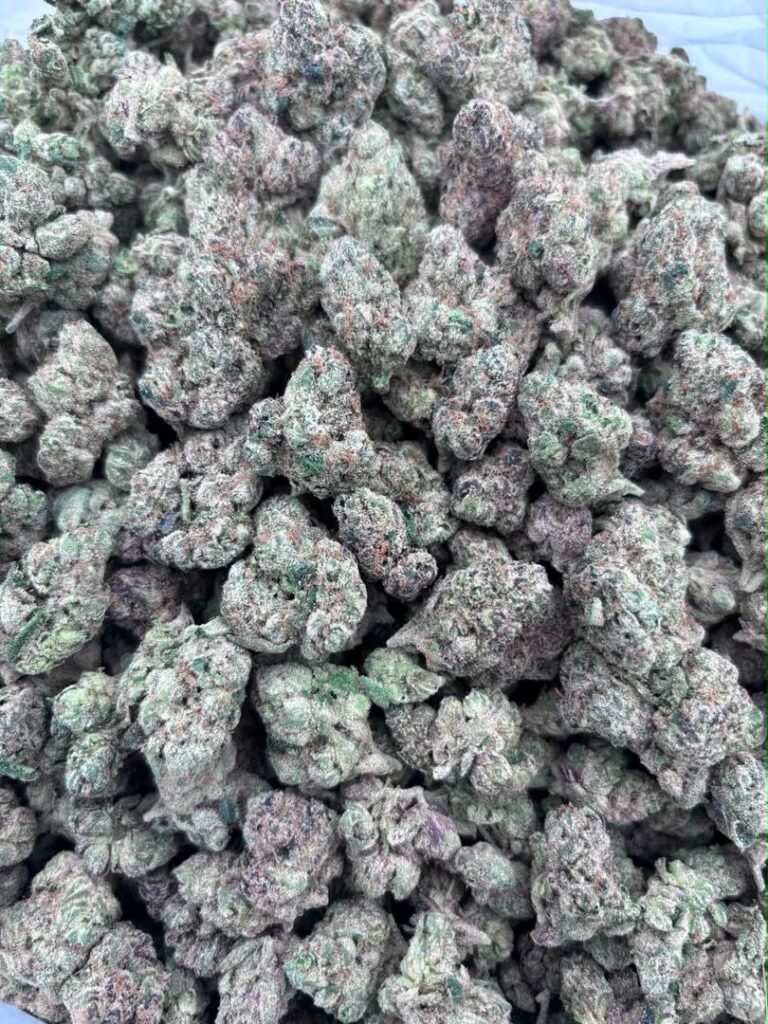
Crack open a jar of good Candy Gas and the first thing that hits you is sweetness, often described as candy, fruit, or berry, sometimes with a creamy, dessert-like edge underneath it. A second or two later, the gas shows up: a sharp, pungent, diesel-like funk that sits right behind the sweetness instead of replacing it. One Leafly reviewer described it as a loud, sweet candy smell mixed with a heavy gassy backend, with dense, sticky, trichome-covered buds showing some real color throughout.
On the exhale, most reviewers describe a smooth smoke with a strong diesel punch left behind, according to that same Leafly thread. Others describe a more citrus or tropical note showing up mid-palate, which tracks with the limonene content sitting in the terpene profile. The overall effect is layered: sweet first, citrus or tropical in the middle, and gas or fuel on the finish, a pattern echoed by multiple strain guides including Candy Gas Strain Clinic’s product description.
If you’re shopping specifically for the sleep-focused side of this strain, a jar with a heavier, earthier, more musky background note (that’s the myrcene) is generally a better bet than one that’s almost entirely bright citrus up front. Nose isn’t a perfect predictor, but it’s a genuinely useful shortcut when a full lab sheet isn’t available at the counter.
What the High Actually Feels Like, Minute by Minute ⏱️
Almost every review of Candy Gas describes the same basic two-part pattern, and this matters a lot if you’re using it specifically for sleep instead of just recreation.
First 10 to 20 minutes. A clear-headed, social, upbeat lift. You feel talkative, a little giggly, and mentally sharp rather than foggy. This is the limonene and the early wave of THC doing their thing. Herb.co describes this opening stretch as a euphoric head lift that keeps users social and lightly focused before anything heavier sets in. If you’re expecting instant sedation, this first phase can actually be a little confusing. It doesn’t feel sleepy at all.
20 to 60 minutes in. This is where the body effects start creeping up on you. Tension in your shoulders, jaw, and lower back starts to let go. Your thoughts slow down. Conversations start feeling less urgent. This is where the caryophyllene and myrcene start pulling more weight, and it’s the part people mean when they describe Candy Gas as “melting” them into the couch.
Past the one-hour mark. For a lot of users, this is where things tip into full sedation, especially at higher doses. A Leafly reviewer described the effects coming on fast with a strong head change, then settling into a relaxed body high without a total knockout. Other reviewers describe it going further than that, into the kind of heaviness where getting up off the couch takes real effort. One review specifically mentioned the strain easing chronic shoulder pain enough to finally get comfortable at night.
Duration runs about 2 to 3 hours for most people, based on collected user reviews, with a slow, gradual fade rather than a hard stop. That’s a detail worth remembering, because it directly affects how you should time your last dose before actually trying to fall asleep. Use it too late, and you might still be riding the tail end of the high right as your alarm is about to go off.
So, Does Candy Gas Sleep Actually Work? 😴
Short answer: for a lot of people, yes, at least in the short term. Longer answer: it’s more complicated than any single review lets on, and the “why” behind it matters more than the marketing copy suggests.
Across Leafly, Herb.co, and independent cannabis blogs, the same themes show up again and again. Reviewers describe Candy Gas as a solid pick for stress, mood, and unwinding, with heavier doses pushing things toward genuine sleep, according to Herb.co’s roundup of user feedback. One Leafly user said the mellow-but-strong high helped with both chronic shoulder pain and insomnia. Other reviewers on Jolly Green Life describe it as a nighttime favorite, something they intentionally save for winding down rather than daytime use, noting it’s “not ideal for productivity” unless you’re using a very small amount.
None of that is surprising once you look at the actual research on why cannabis affects sleep in the first place. Two things are doing the heavy lifting here: THC itself, and the specific terpenes riding along with it in this particular strain.
The THC Side of the Story
THC has what researchers call a biphasic effect on sleep, meaning the effect flips depending on the dose. Low to moderate amounts tend to shorten the time it takes to fall asleep and increase total sleep time. Higher amounts start working against you, suppressing REM sleep, disrupting normal sleep stages, and pushing tolerance up faster, according to a review published by Canna Specialists. THC also suppresses orexin, a brain chemical that keeps you alert and awake, which is part of why a strong hybrid like Candy Gas can produce real, heavy drowsiness once the initial euphoric phase passes.
This lines up with a large real-world study using the Strainprint tracking app, published in BMC Psychiatry. Researchers tracked thousands of logged sessions from people using cannabis specifically for insomnia tied to depression or anxiety. The finding: indica-dominant and indica-hybrid strains reduced insomnia symptoms significantly more than CBD-only strains did. Since most modern Candy Gas cuts are described as indica-leaning hybrids, that’s a real point in the strain’s favor for sleep specifically, not just relaxation in a general sense.
A more recent PLOS Mental Health study covered by Healthline followed people using daily cannabis for insomnia over a full 18 months. Sleep improved, and so did anxiety and pain scores over the same period. But here’s the catch that’s easy to miss: the benefit was strongest in the very first month of the study and slowly faded afterward, even though it never disappeared completely. That’s tolerance building in real time, and it’s the exact same pattern people describe anecdotally with Candy Gas once they start using it every single night.
The Terpene Side of the Story
This is where Candy Gas genuinely earns some credit over strains that are all flavor and no real chill.
Myrcene has a long-standing reputation as a sedative, and it’s not just folklore. A 2002 mouse study found it reduced movement and extended sleep duration. More recent research on beta-myrcene, published in a 2024 paper, found it eased insomnia symptoms in mice by boosting activity in GABA, the same calming brain chemical system that prescription sedatives like benzodiazepines target. Releaf UK notes that myrcene can make up over half the total terpene content in strains known for heavy, “couch-lock” style effects, and while human trial data is still limited, animal studies consistently point the same direction: sedative, anxiety-reducing, and pain-relieving.
Caryophyllene works through a completely different pathway. It’s the only terpene currently known to bind directly to CB2 receptors in the body, similar to how a cannabinoid would. Research summarized by Nama CBD points to caryophyllene easing stress and physical discomfort, both of which are common root causes of trouble falling asleep in the first place. If your sleeplessness comes from an achy back, tight shoulders, or a mind that won’t stop spinning, caryophyllene is doing quiet, meaningful work in the background of a Candy Gas high.
Linalool, even in trace amounts, adds a mild anxiety-easing effect similar to lavender essential oil, according to Mamedica’s terpene guide, which notes linalool can reduce anxiety by affecting serotonin receptors in the brain and has its own mild analgesic properties on top of that.
Limonene is the one true wildcard in this whole mix. It’s mood-lifting and anti-anxiety, but it is not sedating on its own, and in high enough concentrations it can actually work against sleepiness by keeping you more alert, social, and chatty. That’s a big part of why Candy Gas has that upbeat first act before the relaxing second act ever kicks in. If you happen to get a batch where limonene dominates the terpene sheet, don’t be surprised if it takes noticeably longer to feel sleepy than you were expecting based on someone else’s review.
The Part Nobody Puts in the Marketing: THC and REM Sleep 🧠
Here’s where I want to slow down, because this is the piece most strain reviews skip over entirely, and it’s the most important one if you’re actually trying to protect your sleep quality long term.
THC doesn’t just make you sleepy. It changes the actual structure of your sleep. Researchers have documented since the 1970s that THC suppresses REM sleep, the dream stage tied closely to memory processing and emotional regulation. A 2026 pilot trial published in the Journal of Sleep Research gave insomnia patients a single dose combining THC and CBD and measured their brain activity using high-density EEG equipment. The result: total sleep time actually went down by close to 25 minutes, REM sleep dropped by roughly 34 minutes, and it took significantly longer for participants to reach REM sleep at all compared to a placebo night.
A 2025 systematic review in Sleep Medicine Reviews pulled together decades of research on this exact question and found a fairly clear dose pattern: low doses of THC, generally under 20 milligrams, cause little to no noticeable REM disruption, while higher doses cause more pronounced effects. That detail matters a lot for a strain like Candy Gas, since its THC percentage runs high across most lab reports. A couple of strong hits from flower testing in the mid-20s percent range can put you well past that lower-dose window fairly quickly, especially for someone without a built-up tolerance.
Why should you care about REM disruption if all you want is to fall asleep faster? Two reasons, honestly. First, REM sleep plays a real, measurable role in memory consolidation and mood regulation, so consistently cutting it short isn’t free, even on nights where you feel like you slept just fine. Second, and this is the part that genuinely surprises people: when you stop using cannabis regularly, REM sleep tends to come roaring back. This is called REM rebound, and it shows up as unusually intense, vivid dreams along with disrupted sleep during the first stretch of not using, according to Healthy Life Recovery, which references the original 1975 Feinberg study that first documented this exact effect in humans.
Combine tolerance with REM suppression, and you get a pattern researchers see over and over in the data: regular users often genuinely believe cannabis is helping their sleep, while objective sleep tracking tells a different story entirely. Healthy Life Recovery points to research where most heavy cannabis users technically met the clinical criteria for subthreshold or full insomnia, despite believing their own sleep had improved. Your fitness tracker might log eight full hours. What your brain actually experienced during those eight hours is a separate, more complicated question.
None of this means Candy Gas can’t help you relax before bed. It clearly can, and clearly does for a lot of people, especially used occasionally rather than nightly. It just means “this helped me fall asleep tonight” and “this is improving my long-term sleep quality” are genuinely two different claims, and the current research answers them very differently.
Tolerance, Dependence, and the “It Stopped Working” Problem 📉
If you’ve ever heard someone say their favorite strain “just doesn’t hit like it used to,” that’s tolerance, and with high-THC hybrids like Candy Gas, it tends to build fast under nightly use.
The PLOS study mentioned earlier found the strongest sleep benefit showed up in month one of daily use, with the effect gradually fading afterward, though it never disappeared completely across the full 18-month study period. That waning pattern lines up closely with what regular Candy Gas users describe in their own reviews: the first few weeks feel genuinely great, and then you find yourself needing a noticeably bigger hit just to get back to that same melted, relaxed feeling.
There’s also a withdrawal side to this conversation that doesn’t come up nearly enough in strain reviews. According to Diet Smoke’s research summary, somewhere between 67% and 73% of adults report noticeable sleep problems when they stop using cannabis after a period of regular use, and roughly two-thirds say those specific sleep issues were a real factor in past attempts to quit that didn’t stick. That’s not meant as a scare tactic. It’s simply how dependence tends to work with any regular sleep aid, whether that’s cannabis, alcohol, or certain prescription sleep medications.
None of this is a reason to feel bad about enjoying a Candy Gas session before bed every now and then. It’s a reason to actually pay attention to your own personal pattern over time. If you notice you need it every single night, and a little more of it every month just to get the same effect, that pattern is worth a second look. Not guilt. Just honesty with yourself about what’s actually happening.
The Weed Hangover Nobody Warns You About 🥴
Because Candy Gas tends to run high in THC, next-day grogginess is a real and fairly common risk, especially if you overshoot your usual amount or use it too close to actual bedtime.
“Weed hangover” is a documented, real phenomenon at this point, not just something people say to explain a rough morning. Symptoms typically include brain fog, grogginess despite a full night in bed, dry mouth, and mild headaches, according to a detailed breakdown from Watersider Recovery. It shows up more often with high-THC products (which is exactly what Candy Gas is), larger doses than usual, and late-night use that doesn’t leave your body enough time to process the THC before you’re expected to be up, alert, and functioning the next morning.
Green NV’s guide to cannabis and sleep timing lays out the general pattern behind why timing matters so much here: inhaled cannabis kicks in within about 5 to 10 minutes and typically runs 2 to 4 hours, while edibles take 30 to 90 minutes to start working and can stretch on for 6 to 8 hours total. Using inhaled Candy Gas right at the exact moment you climb into bed, instead of an hour or two beforehand, meaningfully raises the odds you’re either still riding the high or crashing hard right as your alarm goes off.
Most weed hangovers clear up within a few hours to a full day, according to Cannawayz’s guide on the topic, and basic hydration, a decent meal, and a little extra rest usually take care of the rest on their own. But if it’s happening every single time you use Candy Gas, that’s a clear signal from your own body that the dose or the timing isn’t working for you, not something to just push through and ignore.
Smoking, Vaping, or Edibles: Does the Method Matter for Sleep? 💨
Candy Gas shows up in flower, pre-roll, vape cartridge, and even THCA hemp flower form depending on where you’re shopping. The delivery method changes the sleep experience more than people expect.
Smoking or vaping flower gives you the fastest onset, usually within minutes, and the shortest overall duration, generally 2 to 3 hours. This makes it easier to time precisely before bed and easier to stop at the exact effect level you want, since you can pause between hits and gauge how you feel before going further.
Vape cartridges built from Candy Gas extract behave similarly in terms of onset speed, though the terpene profile can shift depending on how the extract was processed. Some processing methods strip out more of the lighter terpenes like limonene, which can shift the felt experience toward something heavier and more sedating than smoking the actual flower would.
Edibles or infused products take much longer to kick in, usually 30 to 90 minutes, and last far longer once they do, often 6 to 8 hours. This delayed onset is exactly why edibles cause more accidental overuse than flower does. People take a dose, feel nothing after 20 minutes, take more, and then get hit with both doses at once a little later. For sleep specifically, this longer runway can be an advantage (help staying asleep through the night) or a real liability (grogginess that’s still present when the alarm goes off), depending entirely on the amount and the timing.
If sleep is genuinely your main goal, most experienced users and harm-reduction guides point toward inhaled flower or vape over edibles, purely because the shorter, more predictable window gives you more control over exactly when the effects taper off relative to your wake-up time.
Who Might Actually Like Candy Gas for Sleep ✅
Based on the reviews, the lab data, and the actual research on how THC and these specific terpenes behave together, Candy Gas tends to work best for:
- People whose sleeplessness is tied to stress or a mind that won’t slow down, since the caryophyllene and linalool combination targets anxiety directly, rather than just brute-forcing sedation.
- People dealing with physical tension or mild pain that keeps them tossing and turning at night, since caryophyllene’s CB2 activity and THC’s own pain-relieving properties can genuinely ease that kind of discomfort.
- Occasional users rather than nightly ones, since tolerance builds quickly and the strongest benefit shows up early rather than staying flat over time.
- Experienced cannabis users who already have a good sense of their own THC tolerance, since Candy Gas frequently tests in the mid-20s percent range and sometimes well beyond it.
- People who specifically want the social, upbeat opening phase before settling down, rather than something that sedates them the second it hits.
Who Should Think Twice ⚠️
This strain isn’t the right call for everyone, and that’s worth saying plainly instead of glossing over it.
Low-tolerance or first-time users. Multiple reviewers on Herb.co and Leafly specifically warn that Candy Gas “sneaks up on you.” Starting with a lot of a strain testing 25% THC or higher is a common way to end up anxious or dizzy instead of relaxed, especially if you’re new to cannabis in general.
Anyone prone to anxiety or paranoia at higher THC doses. That early euphoric, chatty phase can tip into racing thoughts for some people well before the calming, body-heavy phase ever has a chance to kick in.
People who need to be sharp early the next morning. Given the strength of the sedation and the real risk of next-day grogginess with a high-THC strain like this, using it before a day that demands focus, driving, or quick reaction time simply isn’t a great trade-off.
Anyone managing a real, diagnosed sleep disorder. Cannabis is not a substitute for a proper diagnosis or treatment for conditions like sleep apnea or chronic insomnia. If sleep problems are genuinely affecting your day-to-day life, that’s a conversation worth having with a doctor, not something to solve with a strain review, this one included.
Pregnant or breastfeeding people, and anyone taking medication that interacts with cannabis. This one isn’t negotiable. Talk to a healthcare provider before using cannabis in either of these situations.
How Candy Gas Stacks Up Against Other “Candy” Strains 🍭
Since the sweet-and-gassy hybrid trend has taken off across the industry, a handful of similarly named strains get mixed up constantly. Here’s the quick version, based on comparisons pulled from Jolly Green Life:
Gas Station Candy leans harder into diesel and fuel notes, with noticeably less sweetness up front compared to Candy Gas.
Candy Gas balances both sides more evenly: sweet on the inhale, gas on the exhale, with a heavier, more grounding body high than most of its lighter competitors.
Cotton Candy Gas is generally lighter and more playful, with a fluffier, less grounding high, according to Mr. Hemp Flower’s product notes, though some Cotton Candy Gas cuts still test high in THCA and lean on caryophyllene and myrcene for that gas-forward finish on the exhale.
Most other “candy” strains chase flavor first and effect second. Candy Gas is one of the few in this category that pairs that flavor with real, heavy-hitting potency, which is exactly why it built a sleep-focused reputation that lighter candy strains never really earned.
If sleep is your main goal, Candy Gas or Cotton Candy Gas will generally get you there faster and more reliably than lighter, more sativa-leaning candy strains, simply because of the deeper myrcene and caryophyllene presence backing up the THC.
How Candy Gas Compares to Classic “Sleep Strains” 🌛
If you’ve been down this road before, you’ve probably already tried the old-school names that usually come up in any sleep strain conversation: Granddaddy Purple, Northern Lights, Wedding Cake. It’s worth seeing how Candy Gas actually stacks up against strains that have decades of reputation behind them instead of just a viral name.
Granddaddy Purple is a heavy indica known for a strong, fast-acting body high and a grape-and-berry flavor. It’s typically higher in myrcene than Candy Gas and tends to hit sedation faster with less of an upbeat opening phase. If you want something that skips straight to drowsy without much of a social buildup first, GDP usually gets there quicker.
Northern Lights is one of the most established indica strains around, known for a simple, reliable, heavily sedating effect with an earthy, sweet-and-spicy smell. It’s less flashy than Candy Gas and generally less potent on paper, which actually makes it a gentler entry point for people who find high-THC hybrids too intense before bed.
Wedding Cake sits closer to Candy Gas in style: a dessert-flavored, indica-leaning hybrid with a strong euphoric opening and a relaxing body finish. The two strains are often compared directly because they share a similar “sweet first, heavy later” structure, though Wedding Cake tends to lean slightly more sedating overall while Candy Gas keeps a bit more of that gassy, energetic edge in the first act.
The honest takeaway: if you want maximum, no-frills sedation with a long track record, Northern Lights or Granddaddy Purple are the safer, more predictable bets. If you want flavor, a social opening phase, and a heavier finish, Candy Gas earns its spot, but expect a little more ramp-up time before the drowsiness actually sets in.
What Real Users Are Saying Across Platforms 💬
Strain guides can only tell you so much. Actual user reviews, spread across Leafly, Weedmaps, Reddit, and dispensary comment sections, tend to paint a more textured picture, and the themes are pretty consistent once you read enough of them.
On Leafly, reviewers repeatedly bring up the contrast between the loud, sweet-and-gas smell and the surprisingly smooth smoke, with the body high landing somewhere between fully relaxed and “definitely not getting up off this couch,” depending on the dose. A few specifically mention using it for chronic pain and sleep issues together, describing the high as strong but not so heavy that it knocked them out instantly.
Herb.co’s review roundup notes that discussion on Reddit tends to go a layer deeper than shorter dispensary reviews, with users comparing specific cuts and phenotypes rather than just rating the strain generically. Weedmaps commentary, according to that same roundup, tends to focus more on the limonene-and-caryophyllene combination behind the fruity, funky smell, along with the deep purple, trichome-heavy bud structure that shows up in well-grown batches.
A recurring theme across nearly every platform: people describe Candy Gas as a strain best saved for evenings rather than daytime use, with more than a few calling it a personal “nighttime favorite” specifically because of how reliably it eases them into a relaxed, sleepy state after the first hour.
Buying Candy Gas Smart: What to Actually Check For 🔍
Since “Candy Gas” isn’t one fixed genetic line, the label alone won’t tell you much about what you’re actually getting. A few things genuinely matter more than the name printed on the jar:
- Ask for the lab sheet. Look at the THC percentage alongside the full terpene breakdown, not just the THC number by itself. A batch with strong myrcene and caryophyllene will feel noticeably more sedating than one where limonene dominates the profile, even at the exact same THC percentage.
- Check the harvest date. Terpenes degrade over time, sometimes fairly quickly. A jar that’s been sitting on a shelf for months will smell weaker, taste flatter, and generally hit softer than a fresh batch, even when the label says the exact same strain name.
- Ask your budtender which phenotype or cut they’re actually carrying. Dispensary staff usually know whether their Candy Gas leans closer to the Gelato x Runtz side or the older Kandy Kush x OG side, and that single answer tells you a lot about what kind of high to expect that night.
- Do a price check. Candy Gas typically runs $11 to $17 per gram depending on the market, according to Herb.co’s pricing data, with small-batch, craft indoor grows sitting at the top of that range and bulk or budget versions coming in lower.
- Look at the bud structure itself. Dense, sticky, trichome-heavy buds with some color variation are a good sign of careful cultivation, according to grower notes referenced by both Leafly and JointCommerce. Dry, crumbly, pale buds are a sign of a rushed or poorly stored harvest, regardless of what the label claims.
Alternatives If You Want Something Gentler 🌙
If the idea of a strain testing 25% THC or higher feels like overkill for something as simple as falling asleep, you’re not wrong to want a gentler option. A few worth knowing about:
CBD-dominant strains or tinctures. These won’t get you high at all, and research summarized by Recovered.org suggests CBD can calm anxiety and physical discomfort without disrupting REM sleep the way THC tends to at higher doses.
Low-THC, high-myrcene strains. These give you some of the sedating terpene benefit that Candy Gas offers, without the intensity of a strain running 25% THC or more.
CBN products. Early research along with a growing pile of consumer reports both point to CBN as a milder, more sleep-specific cannabinoid, without the same strength of psychoactive punch that THC brings.
Balanced 1:1 THC to CBD products. Some users find that pairing THC with an equal amount of CBD smooths out the anxious edges of a high while still keeping some of the relaxing, sedating benefit intact.
Basic sleep hygiene changes. A consistent bedtime, a dark and cool room, and cutting screens out an hour before bed still matter quite a lot, and these habits work alongside anything else you try, cannabis included, rather than competing with it.
None of these options are automatically “better” than Candy Gas. They’re just different tools depending on what you actually need on a given night: a hard reset after a genuinely rough week, or a gentle, repeatable nudge you can lean on night after night without much drama.
Building It Into an Actual Nighttime Routine 🛏️
One thing that gets lost in most strain reviews: Candy Gas isn’t a replacement for a decent bedtime routine, it’s an addition to one, and it tends to work a lot better when it’s not the only thing carrying the load.
A cool, dark room still matters more than most people give it credit for. Body temperature and light exposure both play a direct role in how quickly you fall asleep and how deep that sleep actually gets, regardless of what you did or didn’t smoke beforehand. Cannabis can smooth over a racing mind, but it won’t undo the effect of a room that’s too warm or too bright.
Cutting off screens a while before bed still helps too. Blue light delays your body’s natural melatonin release, and stacking that delay on top of cannabis’s own effect on sleep timing can push your actual sleep onset later than you’d expect, even if you feel relaxed.
A consistent wind-down window matters as much as the substance itself. People who use Candy Gas as part of a repeated, low-key routine (same rough time, same quiet activity beforehand, same room setup) tend to report more consistent results than people who use it inconsistently and expect the exact same effect every time regardless of everything else going on that night.
None of this is meant to talk you out of using cannabis for sleep. It’s meant to point out that the strain is doing maybe half the work. The rest of it is boring, unglamorous habit, and that boring half is exactly what makes the cannabis half actually work the way you want it to.
My Honest Take 💭
Here’s where I want to be straight with you instead of wrapping this whole thing up with a neat, tidy bow.
Candy Gas is a genuinely good strain for winding down. The flavor is real, the relaxation is real, and for a lot of people, especially those dealing with stress-driven sleeplessness or ongoing physical tension, it does exactly what people say it does. That part isn’t hype, and the reviews across multiple platforms consistently back it up.
But “this helped me fall asleep tonight” and “this is a sustainable long-term sleep solution” are two genuinely different claims, and the research draws a clear line between them. THC’s effect on sleep is real but temporary. Tolerance builds within weeks of nightly use. And heavier use comes with a REM sleep cost that never shows up on a sleep tracker, yet still shows up in how rested you actually feel the next day. None of that is a reason to avoid Candy Gas entirely. It’s a reason to treat it the way you’d treat any genuinely strong tool: with a little respect for what it’s actually doing inside your brain, not just how it feels in the moment you’re using it.
If you’re reaching for it occasionally after a hard week, enjoy it without overthinking it. If you notice you genuinely can’t fall asleep without it anymore, that pattern is worth a real, honest look. Not guilt. Just clear eyes about what’s actually going on with your own sleep.
A Simple Way to Try It Without Overdoing It 📝
If you’re going to try Candy Gas for sleep for the first time, a few basic, low-stakes habits make a real difference:
Start with less than you think you need, and give it real time to work before deciding whether you need more. Because THC’s effect on sleep flips from helpful to disruptive as the dose climbs, less is genuinely more here, especially the first few times.
Give yourself a buffer between using it and actually trying to sleep, rather than using it the second you climb into bed. This gives your body a little runway to process the early, more stimulating phase of the high before you’re trying to drift off.
Keep a loose mental note of how you feel the next morning, not just how you felt the night before. If you’re consistently groggy, that’s real feedback, not something to brush off.
Treat it as an occasional tool rather than a nightly requirement, at least at first, so you can actually tell whether it’s helping or whether your body has simply adjusted to expecting it.
None of this is a rigid formula. It’s just the same basic pattern that shows up again and again across the research and the reviews: start modest, pay attention, and adjust based on how your own body actually responds, rather than copying someone else’s routine exactly.
FAQ: Candy Gas Sleep Questions, Answered ❓
Is Candy Gas an indica or a sativa? It depends on which version you get. The Gelato 41 x Runtz cross is generally described as an indica-leaning hybrid. The Kandy Kush x OG #18 version from Crockett Family Farms is listed as a 50/50 hybrid. Either way, most users report a body-heavy back half to the overall high.
How much THC does Candy Gas have? Most lab reports put it somewhere between 20% and 28%, with some individual batches testing higher. Always check the actual lab sheet for the specific batch you’re buying rather than relying on the strain name alone, since potency varies a lot by grower.
How long do the effects of Candy Gas last? Around 2 to 3 hours for most users based on collected reviews, with a gradual, slow fade rather than a sudden stop.
Will Candy Gas give me a hangover? It can, especially at higher doses or when used too close to actual bedtime. Giving yourself a buffer of an hour or two between inhaled use and lights out generally lowers the odds of waking up groggy.
Does Candy Gas actually improve sleep quality, or just help you fall asleep faster? Both, up to a point. At lower to moderate doses, it can shorten the time it takes to fall asleep and increase total sleep time. At higher doses, or with regular nightly use, it can suppress REM sleep and gradually lose effectiveness as tolerance builds.
Is it safe to use Candy Gas every night for sleep? Occasional use generally carries lower risk than nightly use. Regular cannabis use for sleep is tied to faster tolerance, measurable REM sleep changes, and rebound insomnia if you ever stop. If you find you’re using it every single night just to function, that pattern is genuinely worth examining.
What’s the difference between Candy Gas and Cotton Candy Gas? Candy Gas balances sweet and gassy notes evenly, with a heavier, more grounding high overall. Cotton Candy Gas tends to be lighter, sweeter, and more playful, though certain cuts can still test high in THC.
Can Candy Gas help with anxiety-related sleep problems specifically? Based on its terpene profile, caryophyllene and linalool both have documented anxiety-easing properties, which lines up with user reports describing it as helpful for racing thoughts and stress before bed. That said, higher THC doses can occasionally increase anxiety in some people rather than reduce it, so this really depends on your own individual response.
Does the “Candy Gas” name guarantee I’ll get the same experience every time? No, and this is worth repeating. Because multiple breeders use the same or a very similar name, the THC level, terpene profile, and overall effect can genuinely differ from one dispensary’s batch to another’s, even under the exact same label.
Cannabis affects everyone differently, and strain names don’t guarantee an identical experience from one jar to the next. If sleep problems are a regular, ongoing part of your life, a conversation with a doctor is worth far more than any strain review, this one included. Use responsibly, know your local laws, and start lower than you think you need to. 🌙
