 Skip to content

The first time I cracked open a jar labeled “Candy Gas,” I honestly didn’t know what to expect. The name sounds like a joke. Candy and gas? Those two things don’t belong in the same sentence, let alone the same nug. But the second I popped the lid, I got it. Sweet fruit punch hit me first, then right behind it, a sharp fuel smell that felt like standing next to a running engine. That contrast is the whole point. And it’s not an accident. It comes down to candy gas terpenes, the actual chemical compounds doing all the work behind that smell.
This post is everything I’ve learned about the candy gas terpene profile after digging through lab reports, reading grower notes, and comparing what real people say on Reddit and Leafly against what dispensary menus promise. 🧪 No fluff, just what’s actually in the jar and why it smells the way it does.
What Is Candy Gas, Really? 🤔
Here’s the first thing you need to know. Candy Gas isn’t always one single strain. Sometimes it is. Sometimes it’s a whole category.
A few breeders do use “Candy Gas” as the actual name of a specific cut. Weedmaps lists it as a balanced hybrid, mixing relaxing indica traits with a more energetic sativa lift. But dig into the wider market and you’ll see “candy gas” used as a style label too, kind of like how “gassy” or “fruity” describes a whole family of strains instead of just one.
As Lucky Elk puts it, candy gas describes a flavor profile more than a single genetic line. It blends dessert-like sweetness (think berries, grape, or citrus candy) with a sharp diesel or skunky punch underneath. It’s a category now, not just a name on a label.
Either way, whether you’re looking at a specific Candy Gas cut or a “candy gas style” strain from a totally different lineage, the thing tying it all together is the terpenes. That’s what makes the sweet-then-gas combo happen.
Where Candy Gas Comes From 🧬
The genetics story gets a little messy, and honestly, that’s part of why the flavor varies so much jar to jar.
Some sources trace Candy Gas back to Crockett Family Farms, crossing Kandy Kush with OG #18. Other breeders, like Grounded Genetics, claim a different lineage entirely, crossing Bacio Gelato with Runtz, or in some versions, Gelato 41 with Runtz. And then you’ve got regional variants like Purple Candy Gas, which one grower lists as a cross of Sunset Sherb and Tina, per its Leafly product page.
So which one is “real” Candy Gas? Honestly, there isn’t one clean answer. What matters more for you as a shopper is the lab data on the actual bag in front of you, not the breeder story on the label. I’ll get into exactly what to look for later on.
What all these lineages share is a family tree built from two big cannabis eras. You’ve got the diesel-and-fuel genetics from the late 90s and early 2000s (ChemDog, Sour Diesel), and you’ve got the dessert wave that followed a decade later (Gelato, Zkittlez, Runtz). Candy Gas sits right at the intersection, according to JointCommerce’s strain guide. It’s basically what happens when a generation raised on both OG kush and dessert strains decided they wanted both flavors in one bud.
The Candy Gas Terpene Profile, Broken Down 🔬
Okay, here’s the part you actually came for. Let’s talk about what’s chemically happening inside a Candy Gas bud, and why the candy gas terpene profile hits the way it does.
Beta-Caryophyllene: The “Gas” Half 🌶️
This is usually the anchor terpene, and it’s the one doing most of the heavy lifting on the fuel side. SeedsHereNow tests show caryophyllene sitting around 0.3% to 0.9% in Candy Gas flower, and it’s the terpene responsible for that peppery, spicy, diesel-adjacent edge you get on the exhale.
Caryophyllene is also kind of a weird one in the terpene world. It’s the only terpene known to bind directly to cannabinoid receptors, specifically CB2 receptors. That means it’s not just about smell. Some research points to caryophyllene playing a role in body relaxation and inflammation response, which lines up with why Candy Gas tends to mellow you out physically even while your head stays clear.
Limonene: The “Candy” Half 🍋
If caryophyllene is the gas, limonene is the candy. This terpene brings the bright citrus and sweet top notes that hit you first when you open the jar. According to Herb’s strain guide, limonene is closely tied to mood elevation, which tracks with the upbeat, social feeling a lot of Candy Gas smokers report right at the start of their high.
Limonene levels in Candy Gas usually land somewhere between 0.2% and 0.7%, based on lab data compiled by SeedsHereNow. The higher the limonene, the more that citrus-candy smell punches through before the gas notes take over.
Myrcene: The Earthy Backbone 🌿
Myrcene shows up in trace amounts up to about 0.5% and works more in the background. It adds an earthy, herbal depth that keeps the whole profile from feeling too sharp or one-note. Myrcene is also the terpene most associated with that heavier, body-relaxing feeling later in the high. It’s common in a lot of indica-leaning strains, and its presence here is part of why Candy Gas can feel calming even with THC levels north of 25%.
Linalool: The Floral Smoother 💐
Linalool usually only shows up in trace amounts in Candy Gas, but don’t underestimate it. This is the terpene that keeps the whole aroma from feeling harsh or “chemical.” It adds a soft floral note that rounds out the sharper edges from the caryophyllene and any sulfur compounds in the mix. Linalool is also the terpene found in lavender, so if you’ve ever caught a faint floral whisper under all that candy and fuel, that’s linalool doing its thing.
Nerolidol and Ocimene: The Wild Cards 🍇
Some Candy Gas phenotypes, especially the Purple Candy Gas variants, bring in nerolidol as a top three terpene alongside caryophyllene and limonene. Leafly’s product data on one purple cut shows all three working together for a creamy, nutty, gassy combo instead of the more citrus-forward version.
Ocimene pops up in some batches too, and it’s part of what pushes a phenotype toward a more tropical, fruity candy character instead of a straight citrus one. If you’re chasing a specific vibe (tropical candy versus straight citrus candy), checking for ocimene versus straight limonene dominance on a lab report will tell you a lot before you even open the bag.
Total Terpene Percentage: Why It Matters 📊
Here’s something a lot of people skip over. It’s not just which terpenes are in the jar, it’s how many terpenes are in there total. JointCommerce notes that quality Candy Gas usually tests between 2.0% and 4.0% total terpenes by weight, with standout craft batches pushing past that.
Higher total terpene percentage generally means a louder smell straight out of the bag and a flavor that carries all the way through your session, whether you’re smoking flower or hitting a vape. A bag testing under 1% total terpenes is going to smell and taste flat compared to one testing at 3%, even if the strain name on the label is identical.
How These Terpenes Actually Create That Sweet-Then-Gas Effect 🧠
So why does Candy Gas smell like candy first and gas second, instead of both at once? A lot of it comes down to volatility, which is a fancy way of saying how quickly each terpene evaporates and hits your nose.
Limonene and other lighter terpenes tend to be more volatile. They hit your nose fast, which is why the sweet candy smell greets you the second you crack the jar. Caryophyllene is heavier and takes a little longer to fully register, especially once you break the bud apart or actually combust it. That’s why the gas and pepper notes tend to build as you smoke, showing up strongest on the exhale rather than the first sniff.
This isn’t unique to Candy Gas, by the way. It’s basic terpene chemistry, and it’s the same reason a lot of “candy gas style” strains across totally different genetic lines can still deliver that same sweet-to-fuel arc. If the terpene ratio is similar, the experience will feel similar, even if the strain names on the label are completely different plants.
There’s also a bigger idea at play here called the entourage effect. The theory is that terpenes don’t just sit around making weed smell good, they actually work together with THC and other cannabinoids to shape the overall experience. So when you smoke a strain with a lot of caryophyllene and myrcene, the relaxing, body-heavy part of the high tends to come through stronger. When limonene leads, the mood-lifting, social part shows up first. Candy Gas is a pretty good real-world example of this in action, since the terpene mix lines up almost perfectly with how people describe the high moving from a bright, uplifting start to a mellow, relaxed finish. Researchers are still figuring out exactly how strong this interaction is, but the pattern shows up again and again in strain after strain, and Candy Gas fits it well.
What Candy Gas Actually Smells And Tastes Like 👃
Lab numbers only tell half the story. Here’s what people actually report smelling and tasting when they open a bag.
The general consensus across grower notes and dispensary listings is a sugary candy smell up top (think sour candy, blue raspberry, or grape syrup depending on the phenotype), layered with sharp diesel and skunky funk underneath. One product description described the smell as similar to eating sour candy right at a gas pump, which honestly nails it better than anything I could come up with myself.
On the inhale, most people report a smooth, sweet hit. On the exhale, that’s when the gas shows up, sometimes with a peppery kick that catches in the back of your throat. Grinding the bud tends to intensify the gas smell even more, which makes sense given how caryophyllene works.
Not every batch nails this balance, though. A Herb.co review mentioned a Reddit user who tried a TSB cut and got a loud, skunky gas nose but barely any candy sweetness at all. That’s a good reminder that phenotype and grow conditions matter just as much as the strain name.
Candy Gas Terpenes By Consumption Method 🔥
How you consume Candy Gas actually changes how the terpenes show up, and that trips a lot of people up.
Smoking flower gives you the most complete picture of the terpene profile, but it also burns off some of the lighter, more delicate terpenes almost instantly. Combustion is hot, and heat destroys some of the finer floral or citrus notes before you even get to enjoy them. This is part of why flower tends to taste “loud” but a little rougher around the edges compared to other methods.
Vaping flower at a lower temperature (usually somewhere around 315 to 350 degrees Fahrenheit) preserves more of those lighter terpenes like limonene and linalool. A lot of people say vaped Candy Gas tastes noticeably sweeter and less harsh than smoked Candy Gas, simply because you’re not torching off the top notes.
Vape cartridges are a different story entirely. Live resin carts, which are made from flash-frozen fresh plant material, tend to hold onto the original candy gas terpene profile the closest. Distillate carts, on the other hand, often strip out most of the natural terpenes during processing and then add them back in using terpene isolates, sometimes from other plants entirely. That’s why two carts labeled “Candy Gas” can taste completely different depending on whether they’re live resin or distillate based. If terpene accuracy matters to you, always check whether a cart is labeled live resin, live rosin, or “strain-specific” terpenes versus just “natural terpenes.”
Dabbing concentrates like live rosin or live resin tends to deliver the most intense version of the flavor, since these extraction methods are built around preserving terpenes at every step. If you want to taste the full, unfiltered candy gas terpene profile in its loudest form, a fresh dab from a quality live rosin batch is usually the closest you’ll get.
Edibles are the outlier here. Since edibles go through your digestive system instead of your lungs, you lose almost all of the terpene flavor and a good chunk of the terpene-driven effects too. If flavor and the specific candy-then-gas experience is what you’re after, edibles aren’t going to deliver it the way flower, vapor, or concentrate will.
THC Levels And Potency 💪
Candy Gas isn’t messing around on potency. Lab-tested numbers across multiple sources put THC somewhere between 20% and 29%, with a lot of batches landing in the mid-to-high 20s. SeedsHereNow reports total cannabinoids as high as 26% to 34% on some retail COAs.
One Leafly listing for Purple Candy Gas shows total THC at 30.9%, with total terpenes around 2.21%. That’s on the higher end, and it puts this strain firmly in the “know your tolerance” category, especially for anyone newer to cannabis.
Older listings of Gas Candy (the same strain under a flipped name) show lower numbers, closer to 19-20% THC, according to Leafly’s strain page. This is a good example of why you should always check the actual lab report on your specific bag instead of trusting a general strain average. Potency swings a lot depending on the grower, the cut, and the harvest.
What The High Actually Feels Like 🌈
Here’s where real user reports get useful, because lab numbers can’t tell you how something actually feels.
The general pattern people describe is a quick-hitting cerebral lift right at the start. Mood goes up, focus sharpens a bit, and things feel more social and easy. That tracks with the limonene content doing its mood-boosting thing early in the high.
As the high settles in, a body-relaxing wave tends to follow, without necessarily locking you to the couch. This is where the caryophyllene and myrcene combo comes through. Most reports describe it as relaxing but still functional, not the kind of heavy sedation that ends your night on the spot. A Diesel Hemp customer review described the effect as euphoric with a nice head feel, more cerebral than couch lock, calling it a functional high you can actually feel without getting flattened.
One Reddit user in a Canadian cannabis subreddit, reviewing a Plush phenotype (Kandy Kush x OG Kush), called it some of the smoothest smoke they’d had in a while, and got stoned enough that autocorrect had to help finish their review. That’s about as honest a real-world endorsement as you’re going to find.
On the flip side, some reviewers point out this isn’t a strain for the gym. One person mentioned smoking it before a workout and immediately regretting it, saying it left them too relaxed to push through a session. So this is much more of an evening, creative-session, or wind-down strain than a productivity boost.
What Candy Gas Looks Like 👀
You can often spot a good Candy Gas bag before you even smell it. The visual cues are almost as telling as a lab report.
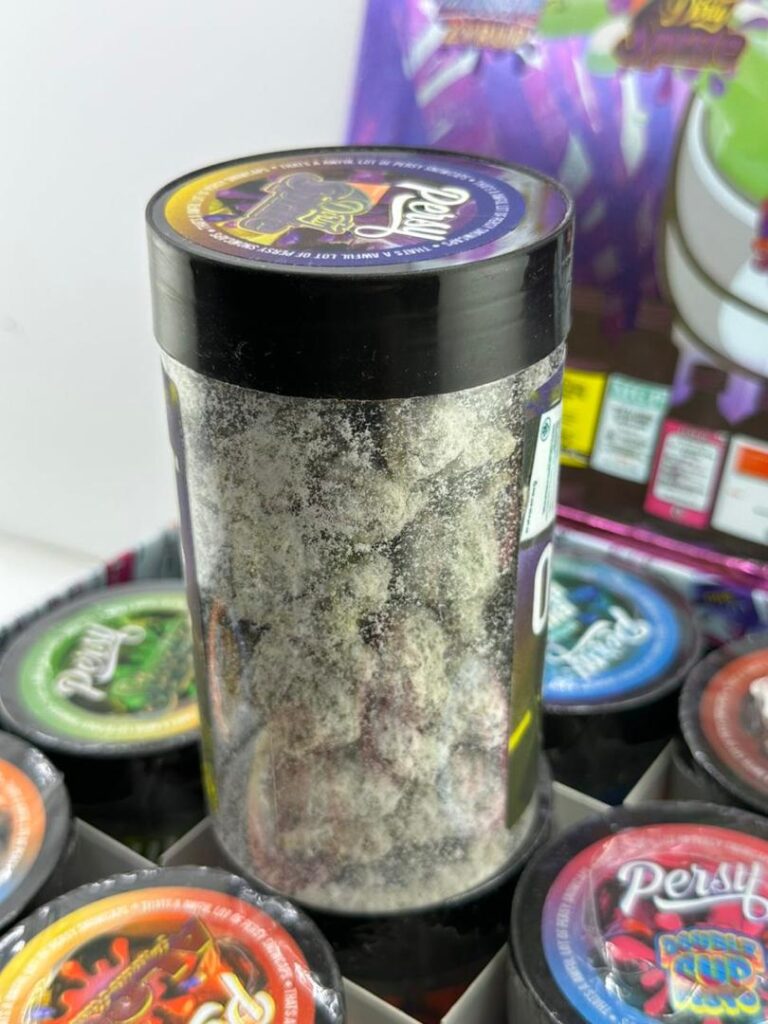
Look for dense, chunky buds without a lot of airy, fluffy sections. Color runs from deep forest green to vivid purple and indigo, especially in phenotypes grown in cooler temperatures. Bright orange to rust-colored pistils weave through the surface, and at peak ripeness, the trichome coverage should look almost frosted white, like the bud got dusted in sugar.
That heavy trichome coating isn’t just for looks. It’s a pretty reliable signal of high resin content, which usually means more terpenes and cannabinoids packed into the flower. If a bag looks dull, dry, or sparse on trichomes, that’s often a sign the terpene profile (and the smell that comes with it) is going to fall flat too.
Growing Candy Gas: What To Expect 🌱
If you’re thinking about growing this one yourself, know going in that it’s not a beginner strain. JointCommerce and other grower resources classify Candy Gas as a moderate to advanced grow, mainly because it’s picky about environmental control.
Temperature swings matter a lot here, especially if you’re chasing that deep purple coloring. Cooler nighttime temps during the final weeks of flowering tend to bring out more vivid purple and indigo tones in the buds. Humidity control matters too, since dense, chunky buds like these are more prone to mold if airflow isn’t managed well.
One grower on a macro growing forum mentioned that their purple Candy Gas phenotype basically sold itself just off looks and smell alone, no marketing needed. That’s the kind of payoff you’re working toward if you nail the grow conditions, but it does take some experience to consistently pull it off.
If you’re growing for terpene production specifically, keep in mind that terpene expression is heavily influenced by curing, not just growing. A slow, proper cure after harvest lets those volatile compounds like limonene stick around instead of evaporating off too fast, which directly affects how loud your final candy gas terpene profile actually turns out.
How To Keep The Terpenes Alive Once You Get It Home 🏺
Terpenes start disappearing the moment a jar gets opened, and a lot of people accidentally wreck their own flower without realizing it. A few habits make a real difference.
Keep it in a sealed, airtight glass jar, away from light and heat. Sunlight and warm temperatures both speed up terpene breakdown, which is why that jar sitting on a sunny windowsill loses its smell so much faster than one stored in a cool, dark cabinet.
Don’t grind your flower until right before you use it. Grinding exposes way more surface area to air, and those lighter terpenes like limonene start evaporating almost immediately once the bud is broken apart. A pre-ground jar of Candy Gas sitting around for a few days is going to smell noticeably flatter than freshly ground bud.
Humidity packs (the small two-way packs a lot of dispensaries include) help keep terpenes locked in by preventing the flower from drying out too fast. Dry, brittle bud loses terpenes quicker than properly cured flower sitting at the right humidity range.
If you want to actually taste the full candy gas terpene profile you paid for, treat storage as part of the experience, not an afterthought.
How To Shop For Real Candy Gas Terpenes 🛒
Since “Candy Gas” gets used loosely across the market, your best move as a buyer is to stop trusting the strain name alone and start reading the Certificate of Analysis (COA), or lab report, that should come with any legal-market flower.
Here’s what to actually look for:
Total terpene percentage. Aim for 2% or higher. Anything under 1% is going to smell and taste noticeably weaker, even if it’s labeled Candy Gas.
Caryophyllene and limonene near the top. These two should usually be your first or second highest terpenes if you want that classic sweet-then-gas arc. If caryophyllene isn’t even in the top three, you’re probably not getting the “gas” half of the equation.
A recent test date. Terpenes degrade over time, especially once a jar gets opened and closed repeatedly. Older test dates don’t always reflect what’s actually left in the bag by the time it reaches you.
Visual and trichome quality. Even with a strong COA, dull or dry-looking buds are a red flag. Trichome density and terpene content usually track together.
If a dispensary or online shop can’t produce a lab report, that’s a pretty clear signal to look elsewhere, especially if you’re paying premium prices for this strain.
Candy Gas Pricing: What You Should Expect 💵
Pricing sits in the upper-mid to premium tier, which makes sense given the potency and the loud, photogenic bag appeal. A Reddit reviewer mentioned paying around $60 for a 7-gram bag before a discount, which lines up with what you’d expect from top-shelf indoor flower.
Budget or bulk versions do exist and run noticeably cheaper, but they tend to be less vivid in color and less loud in smell. If price is the deciding factor for you, that’s fine, just adjust your expectations on how strong that candy gas terpene profile is actually going to hit.
Candy Gas vs Other Gas-Candy Strains 🆚
Because “candy gas” has become a whole flavor category rather than one plant, you’ll run into a bunch of related names on dispensary menus. Cotton Candy Gas, Purple Candy Gas, Blueberry Gas Candy, the list keeps growing. Here’s how to think about the differences.
Cotton Candy Gas tends to lean sweeter and more berry-forward, with the gas showing up more as an aftertaste than a dominant note. Purple Candy Gas variants often bring in nerolidol alongside caryophyllene and limonene, giving a creamier, nuttier finish instead of a pure citrus-candy top note. Straight Candy Gas or Gas Candy, depending on which lineage you land on, usually sits closer to the middle, balancing sweet and fuel pretty evenly.
None of these are better or worse across the board. It really comes down to personal preference. If you want more sweet and less fuel, look for higher limonene and lower caryophyllene on the lab report. If you want the opposite, flip that ratio.
Who Actually Enjoys This Strain 🎯
Candy Gas tends to land best with people who already know their tolerance and want a strain that does two things at once: hits with flavor and hits with strength. Flavor chasers who are bored of one-note strains tend to gravitate toward it, since the sweet-to-gas arc gives you a more layered smoking experience than a strain that just tastes like fuel or just tastes like candy.
It also works well for anyone looking for a functional evening strain. Something that lifts your mood and gets you social without immediately putting you to sleep. Given the THC levels involved, it’s not the best pick for total beginners or for anyone who needs to stay sharp and alert afterward.
Frequently Asked Questions ❓
What terpenes are in Candy Gas? The main ones are beta-caryophyllene and limonene, usually followed by myrcene, with linalool, nerolidol, or ocimene showing up depending on the specific phenotype. Caryophyllene brings the peppery gas notes, and limonene brings the citrus-candy sweetness.
Is Candy Gas an indica or a sativa? Most listings describe it as a balanced hybrid, though some phenotypes (especially Purple Candy Gas) lean more indica-dominant. Effects tend to open cerebral and settle into a relaxed body feel.
How strong is Candy Gas? THC typically runs between 20% and 29%, with some tested batches reported as high as 30.9%. That puts it in the high-potency tier, so newer users should start slow.
Is Candy Gas the same thing as Gas Candy? Often yes, they’re used interchangeably, though some brands treat them as separate cuts with slightly different lineages. Always check the lab report rather than relying on the name alone.
What does Candy Gas smell like? Sweet candy and fruit up front (citrus, berry, or grape depending on the batch), followed by a sharp diesel or skunky gas note underneath. People often compare it to sour candy mixed with fuel.
How do I know if I’m getting a good batch? Check the COA for total terpenes above 2%, with caryophyllene and limonene near the top of the list. Pair that with dense, trichome-heavy buds for the best shot at a strong, true-to-name candy gas terpene profile.
Does vaping Candy Gas taste different than smoking it? Yes. Vaping at a lower temperature preserves more of the lighter terpenes like limonene, so it usually tastes sweeter and less harsh than smoking flower, which burns off some of those top notes.
How long do Candy Gas terpenes actually last in storage? With proper storage (sealed glass jar, cool and dark, whole bud instead of ground), a strong terpene profile can hold up for a few months. Once opened and exposed to air and light regularly, expect noticeable flavor loss within a few weeks.
Final Thoughts 🍭⛽
Candy Gas earns its reputation honestly. The candy gas terpenes aren’t a marketing gimmick, they’re a real, testable combination of caryophyllene and limonene (plus supporting players like myrcene and linalool) working together to create something that shouldn’t work on paper but absolutely does in practice.
If you’re shopping for it, don’t just trust the name on the jar. Check the lab report, look for that caryophyllene-limonene combo near the top, and go for total terpenes above 2%. Do that, and you’ll get the real candy gas terpene profile every time, not just a strain name riding on hype.
This article is for informational purposes only and isn’t medical advice. Cannabis laws vary by state and country, so check your local regulations before purchasing or using any cannabis product. Always start low and go slow, especially with high-THC flower.
