 Skip to content

Here’s a question that trips up almost everyone new to cannabis: why do two strains with the exact same THC percentage feel completely different? You’d think 25% THC is 25% THC, no matter what jar it’s in. But it’s not that simple. And the answer is terpenes.
If you’ve never heard that word before, don’t worry. By the end of this guide, you’ll know exactly what terpenes are, how they shape the smell, taste, and feel of your weed, and how to actually read a lab label so you can pick strains based on real information instead of guessing. 🧪
This is the cannabis terpenes complete beginner guide I wish someone had handed me the first time a budtender asked, “Do you prefer myrcene-dominant or limonene-dominant?” and I just nodded like I understood.
What Are Terpenes, Really? 🍋🌲
Terpenes are natural aromatic compounds. They’re not unique to cannabis at all. They show up in oranges, pine trees, lavender, black pepper, mangoes, and hundreds of other plants. Basically, whenever something smells like something, terpenes are usually the reason why.
Cannabis just happens to be loaded with them. A single plant can contain over 150 different terpenes, though most strains are dominated by just a handful, according to a 2026 terpene breakdown from The Library. That’s why one strain smells like fresh lemons, another smells like pine, and another smells like sour candy mixed with diesel fuel.
So when you crack open a jar and get hit with a smell, that’s terpenes talking. As one grower’s guide puts it, terpenes give plants their “distinctive scents, from the bright citrus aroma of oranges to the calming fragrance of lavender and the fresh smell of pine trees,” and cannabis is no exception. (Curio Wellness)
But here’s the part that actually matters for you as a consumer: terpenes don’t just smell nice. They’re increasingly seen as a bigger part of the experience than most people realize, right alongside THC and CBD.
How the Plant Actually Makes Terpenes 🔬
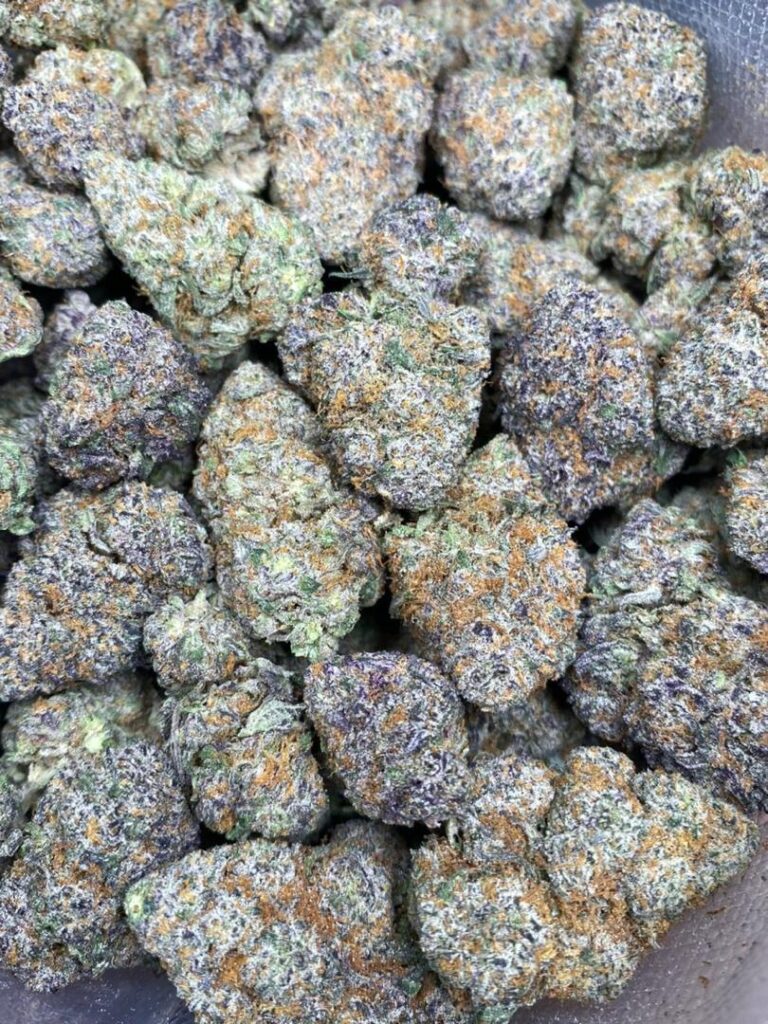
Terpenes are made inside tiny, crystal-like structures on the cannabis flower called trichomes. If you’ve ever looked closely at a nug and seen it glistening like it’s covered in frost, that frost is trichomes. And those same structures are also where THC and CBD get produced.
That’s a useful thing to know, because it means terpene content and cannabinoid content are connected. A plant with a heavy, frosty trichome coat is usually going to test high in both potency and terpenes, since they’re literally coming from the same place on the plant. This is confirmed by Terpene Journey’s 2026 guide, which notes terpene and cannabinoid content tend to correlate because they’re produced in the same glandular structures.
A few things affect how strong that terpene production ends up being:
- Genetics – some strains are just bred to be more aromatic
- Growing conditions – light, temperature, and humidity all play a role
- Harvest timing – picked too early or too late, and the aroma changes
- Curing and storage – how the flower is dried and stored after harvest
This is why the same strain name can smell completely different depending on who grew it. Genetics set the ceiling, but everything after that (grow, harvest, cure) decides how close the final product gets to that ceiling.
Terpenes vs. Cannabinoids: What’s the Difference? 🤔
Quick breakdown, because these two get mixed up a lot:
Cannabinoids (like THC and CBD) are the compounds responsible for the actual high, or the lack of one. THC gets you high. CBD doesn’t, but it may soften some of THC’s edges depending on the ratio.
Terpenes are the aromatic compounds responsible for smell and flavor, and they may also shape how the high feels, though the exact mechanism is still being studied.
Cannabinoids get all the attention because THC percentage is printed in giant letters on every package. But terpenes are quietly doing a lot of the work behind why a strain feels “energizing” versus “sleepy,” even when the THC numbers are nearly identical. As one guide from mello Cannabis puts it, if you’ve ever wondered why two strains with similar THC levels can feel totally different, terpenes are usually the answer. (mello Cannabis)
The Entourage Effect: Do Terpenes Actually Change Your High? 🧬
This is the big question, and it’s worth being honest about where the science actually stands, instead of just repeating dispensary marketing.
The idea is called the “entourage effect.” The theory says cannabinoids and terpenes work together, and the combined effect is stronger or different than what you’d get from THC alone. It’s a popular idea. It’s also not fully proven yet, and good science writing should say that plainly.
Here’s what the research actually shows so far:
Some studies support it. Researchers at the University of Arizona found that certain terpenes, including humulene, linalool, and beta-pinene, mimicked some of THC’s pain-relieving effects on their own, and boosted pain relief further when combined with cannabinoids, without increasing unwanted side effects. (University of Arizona Health Sciences) A separate 2021 study published in Scientific Reports found that certain cannabis terpenes could bind to cannabinoid receptors and selectively boost cannabinoid activity, which was actually the first study to identify that specific mechanism.
Some studies push back. A 2020 study in Frontiers in Pharmacology looked specifically at whether terpenes act directly on cannabinoid receptors and found no clear interaction. That doesn’t rule out an entourage effect entirely, but it does rule out one specific proposed mechanism for it.
The honest summary comes down to this: as Marijuana Moment reported on newer research, the entourage effect is “plausible” but still considered “unproven” by scientists. And Medical News Today’s overview points out that while some evidence supports enhanced pain relief and reduced side effects from whole-plant extracts compared to isolated cannabinoids, much more research is still needed to confirm exactly why.
So here’s the practical takeaway: you don’t need to wait for perfect science to notice that terpenes change your experience. Plenty of people report real, consistent differences between a myrcene-heavy strain and a limonene-heavy one, even if the exact biological mechanism is still being worked out in a lab somewhere. Trust your own experience while staying a little skeptical of anyone who tells you terpenes are 100% proven science. They’re not there yet, and that’s fine.
The 8 Terpenes You’ll See on Almost Every Label 📋
Cannabis has over 150 terpenes, but you really only need to know a handful. These eight show up on most lab reports and cover almost everything you’ll run into. (The Library, NJ)
Myrcene 🥭
Myrcene is the most common terpene in cannabis, and it usually sets the baseline smell for a strain. It smells earthy and musky, with a hint of ripe mango. You’ll also find it in mangoes, hops, and bay leaves. (Mello Cannabis)
Myrcene is closely associated with relaxed, “couch-friendly” strains. If a strain makes you want to sink into the sofa and stay there, myrcene is probably a big part of why. Some research also suggests myrcene may help THC cross the blood-brain barrier more easily, which could be part of why myrcene-heavy strains sometimes feel more sedating at the same THC level.
Limonene 🍊
Limonene smells exactly like it sounds: bright, citrusy, a little sharp. It’s the terpene behind lemon peels and orange rinds. In cannabis, it’s associated with mood lift and stress relief. (Green Theory DC)
If you’re looking for a strain that feels social and upbeat rather than heavy, check the label for limonene as a dominant terpene. It tends to show up in fruit-forward, dessert-style strains.
Caryophyllene 🌶️
Caryophyllene is a little different from the rest, because it’s technically both a terpene and a cannabinoid. It’s the only terpene known to directly activate CB2 receptors in the endocannabinoid system, which is the same receptor system linked to inflammation and pain response. (The Green Treasure)
It smells spicy and peppery (you’ll find it in black pepper itself), and it’s often linked to anti-inflammatory and calming effects. Strains with a gassy, peppery edge usually have caryophyllene riding high on the terpene list.
Pinene 🌲
Exactly what it sounds like: piney, sharp, fresh. Found naturally in pine needles and rosemary. Pinene is often linked to focus and mental clarity, which makes it one of the more popular terpenes for people who want to stay functional and alert rather than foggy. (Green Theory DC)
If a strain smells sharp and forest-like instead of sweet or fruity, pinene is probably doing the heavy lifting.
Linalool 💜
Linalool has a soft, floral smell, close to lavender (it’s actually the main terpene in real lavender too). It’s associated with calm, relaxed feelings, and shows up a lot in strains marketed for stress or sleep support. (The Green Treasure)
Linalool is usually a supporting player rather than the dominant terpene in a strain, but even in small amounts it can noticeably soften a strain’s edge.
Humulene 🍺
Humulene has an earthy, woody, slightly spicy smell, and it’s one of the main terpenes in hops (yes, the same hops used in beer). It’s often linked to appetite suppression, which is a little unusual since most cannabis terpenes go the opposite direction.
Humulene also shows up in some of the pain-relief research mentioned earlier, alongside linalool and beta-pinene, as one of the terpenes that mimicked THC’s effects in University of Arizona research. (UArizona Health Sciences)
Terpinolene 🌿
Terpinolene has a more complex smell: a little floral, a little piney, a little herbal, all at once. It’s less common as a dominant terpene, but when it is dominant, strains tend to feel more energizing and uplifting rather than sedating.
Ocimene 🌸
Ocimene smells sweet and herbal, sometimes described as a little like basil or mint. It’s less talked about than the others, but it shows up frequently as a supporting terpene in tropical and fruity strains, adding brightness to the overall smell.
Quick cheat sheet:
| Terpene | Smell | Often Linked To |
|---|---|---|
| Myrcene | Earthy, musky, mango | Relaxation, sedation |
| Limonene | Citrus, bright | Mood lift, stress relief |
| Caryophyllene | Spicy, peppery | Calm, anti-inflammatory |
| Pinene | Piney, sharp | Focus, alertness |
| Linalool | Floral, lavender | Calm, sleep support |
| Humulene | Earthy, woody | Appetite control |
| Terpinolene | Floral, herbal, piney | Energy, uplift |
| Ocimene | Sweet, herbal | Brightness, sweetness |
How to Read a Terpene Percentage on a Lab Label 🧾
This is the part most beginners skip, and it’s honestly the most useful skill you can pick up from this whole guide.
When you look at a certificate of analysis (COA) or a dispensary label, you’ll usually see terpenes listed as percentages. Something like: Myrcene 1.2%, Limonene 0.8%, Caryophyllene 0.5%. Here’s how to actually use that information.
Total terpene percentage matters. Most flower falls somewhere between 1% and 4% total terpenes, according to multiple lab-testing guides. (GetSmokeys) Anything above 3% is considered strong, and above 4-5% is genuinely exceptional. (Mellow Fellow) If a strain is sitting at 0.6% total terpenes, don’t expect a loud smell or a super pronounced experience, no matter how high the THC number looks.
The dominant terpene tells you the most. Whichever terpene has the highest number on the sheet is usually going to define most of the character of that strain. The second and third terpenes add nuance on top. (Robust Cannabis)
Don’t just trust the indica/sativa label. This is a big one. A strain labeled “hybrid” can still feel heavily sedating if myrcene dominates the terpene profile, or feel energizing if terpinolene leads instead. The terpene profile is a much more reliable predictor of how a strain will actually feel than the indica/sativa/hybrid category printed on the bag. (Robust Cannabis)
Watch for red flags. Natural cannabis rarely shows a single terpene above 5%. If you see a number way beyond that, it might be a sign of added terpenes rather than what naturally came from the plant. (Mellow Fellow)
Fresh matters. Terpenes are volatile. That means they break down over time, especially with exposure to heat, light, and air. A COA is a snapshot from testing day, and a jar that’s been sitting on a shelf for six months probably doesn’t smell the way it did on test day. Always check the testing date if you can. (GetSmokeys)
So next time you’re standing at a dispensary counter staring at a label, skip straight to the terpene section. It’ll tell you more about the actual experience than the THC number ever will.
Why Two Strains With the Same THC Can Feel Totally Different 🍬
Let’s bring this back to something concrete. Take a strain like the Candy Gas strain, which tests in that high-20s THC range that a lot of premium hybrids land in these days. On paper, that puts it in the same potency bracket as a dozen other strains you could grab off any dispensary shelf.
But Candy Gas doesn’t feel like a generic “high THC hybrid.” It has a distinct terpene signature built around limonene, caryophyllene, and myrcene, which is exactly why it smells the way it does: sweet and candy-like up front, with a gassy, diesel-heavy finish underneath. That sweet-then-gas combination is what people mean when they describe a strain as “candy gas” in the first place. The name isn’t just marketing. It’s describing an actual terpene experience.
This is a good example of the bigger point of this whole guide: THC percentage tells you roughly how strong something might be, but the terpene profile tells you what it’s actually going to be like to use. Two strains at 26% THC can feel like completely different products depending on whether limonene or myrcene is running the show.
If you’re strain-shopping and you liked how a candy-and-gas profile felt, that’s useful information you can carry forward. Look for that same limonene-caryophyllene combination on other labels, and you’ll have a much better shot at finding something you’ll actually enjoy, instead of just chasing the highest THC number in the case.
How to Pick a Strain by Terpene Profile, Not Just THC% 🛒
Here’s a simple system you can actually use next time you’re shopping.
Step 1: Decide what you actually want out of the experience. Relaxed and sleepy? Focused and social? Something in between?
Step 2: Match that goal to a dominant terpene.
- Want to unwind and relax → look for myrcene or linalool dominant
- Want a mood lift or something social → look for limonene dominant
- Want to stay clear-headed and alert → look for pinene or terpinolene dominant
- Want calm without heavy sedation → look for caryophyllene dominant
Step 3: Check the total terpene percentage. Aim for at least 1.5-2%, since that’s the range multiple sources point to as the threshold for a genuinely flavorful, effect-rich product. (Terpene Journey)
Step 4: Smell it before you buy it, if you can. Your nose is a surprisingly good terpene detector. If a strain smells the way you’re hoping it’ll make you feel (bright and citrusy, or deep and earthy), that’s a decent real-world confirmation of what’s on the label.
Step 5: Keep notes. Track which terpene profiles you actually liked. Over time, you’ll start recognizing your own pattern, and shopping gets a lot faster and more accurate.
This system works a lot better than shopping by THC percentage alone, and it’s the exact approach a growing number of dispensaries and cannabis educators are pushing people toward in 2026. (The Library, NJ)
How to Keep Terpenes From Disappearing 🌡️
Terpenes are delicate. They’re volatile compounds, which means heat, light, and air all cause them to break down or evaporate over time. Here’s how to protect the ones you paid for.
Storage:
- Keep flower in an airtight container
- Store it somewhere cool and dark (not on a sunny windowsill, not near a heat vent)
- Avoid constantly opening and closing the container, since every open lets some aroma escape
- Use it within a few months for the best flavor, since even well-stored terpenes degrade over time
Temperature when consuming:
Combustion (a lighter flame hitting flower directly) burns at a very high temperature, which destroys a lot of the more delicate terpenes before you even get to taste them. That’s part of why a joint can smell incredible in the jar but taste more one-note once it’s lit.
Vaporizing at lower, controlled temperatures preserves more of the actual terpene profile, since you’re heating the flower enough to release the compounds without torching them completely. If flavor matters to you as much as the high does, a vaporizer with adjustable temperature control is worth the investment.
Concentrates and extracts:
Live resin and similar extraction methods are specifically designed to preserve terpenes that get lost in other processes, which is why live resin products often taste closer to the original plant than distillate does.
Terpene Myths Worth Busting 🚫
Myth: “Indica always means sedating, sativa always means energizing.”
Not really true anymore, and terpene research is a big reason why. A hybrid dominated by myrcene can feel more sedating than an actual indica dominated by pinene. The terpene profile predicts the experience far better than the plant category does. (Robust Cannabis)
Myth: “More THC always means a better high.”
High THC without a strong terpene profile can actually feel flat and one-dimensional. A well-balanced strain at 20% THC with a rich, 3% terpene profile often feels more interesting and enjoyable than a 30% THC strain with almost no smell at all.
Myth: “All terpenes in a product are naturally occurring.”
Not always. Some products add terpenes back in during processing, sometimes botanically derived (from other plants) and sometimes cannabis-derived. Both can be legitimate, but they’re not the same as terpenes that developed naturally with the flower. If a lab sheet shows a single terpene percentage way outside the normal range, that’s worth a second look. (Mellow Fellow)
Myth: “The entourage effect is proven science.”
It’s a reasonable theory with some supporting research, but it’s still considered “plausible” rather than confirmed by scientists actively studying it. (Marijuana Moment) It’s fine to believe your own experience while staying honest about what’s actually been proven.
Frequently Asked Questions ❓
What are cannabis terpenes in simple terms?
They’re natural aromatic compounds that give cannabis (and lots of other plants) their smell and flavor. In cannabis, they may also influence how a strain’s high actually feels.
Are terpenes the same as cannabinoids?
No. Cannabinoids like THC and CBD affect you psychoactively. Terpenes shape smell, flavor, and possibly the character of the effects, but they work differently in the body.
What’s the most common cannabis terpene?
Myrcene. It’s found in the majority of cannabis strains and tends to give an earthy, musky base note.
What terpene percentage should I look for?
Aim for at least 1.5% to 2% total terpenes for a genuinely flavorful, effect-rich experience. Anything above 3% is considered strong.
Do terpenes get you high?
No. Terpenes aren’t psychoactive on their own. THC is what produces the high. Terpenes may shape how that high feels, but they don’t cause it.
Is the entourage effect real?
Some research supports it, some doesn’t confirm a direct mechanism, and the overall scientific consensus right now is that it’s plausible but not fully proven.
How do I preserve terpenes in my cannabis?
Store it airtight, cool, and dark, and use lower vaporizing temperatures instead of direct combustion when flavor matters most.
Why does a strain like Candy Gas smell like both candy and gas at the same time?
Because it carries a terpene profile built around limonene (the sweet, citrus note) alongside caryophyllene and myrcene (the spicier, gassier notes), all showing up together in the same flower.
Can two batches of the same strain have different terpene profiles?
Yes. Growing conditions, harvest timing, and curing all affect terpene expression, so the same strain name can smell and feel a little different from one batch to the next.
Should I shop by THC percentage or terpene profile?
Terpene profile gives you a better sense of the actual experience. THC percentage tells you roughly how strong something is, but not what it’ll feel like to use.
The Bottom Line
Terpenes are the part of cannabis that most beginners skip past on their way to checking the THC number, and that’s honestly backwards. THC tells you how strong something might be. Terpenes tell you what it’s actually going to smell like, taste like, and feel like to use. 🌿
Next time you’re at a dispensary, or looking at your own jar at home, check the terpene profile first. Look at the total percentage, note the dominant terpene, and match it to what you’re actually hoping to get out of the experience. It’s a small habit that makes a real difference in how often you end up with something you genuinely enjoy, instead of just guessing based on a THC number and hoping for the best.
