 Skip to content

If you’ve ever paid $70 for an eighth and thought “why does this smell like candy and diesel at the same time,” you’ve already met the world of exotic cannabis strains. That flavor combo didn’t happen by accident. It’s the result of almost 30 years of breeders chasing flavor, potency, and hype, one cross at a time.
This is the story of how we got here. From landrace plants growing wild in Africa and Asia, to a Bay Area rapper’s cookie brand, to a strain named after a candy that got famous on Instagram, to what’s happening in dispensaries and hemp shops right now in 2026. Along the way, we’ll land on the candy gas strain category, which is basically where this whole story ends up today. 🍬⛽
Let’s get into it.
What “Exotic” Even Means in Cannabis 🌱
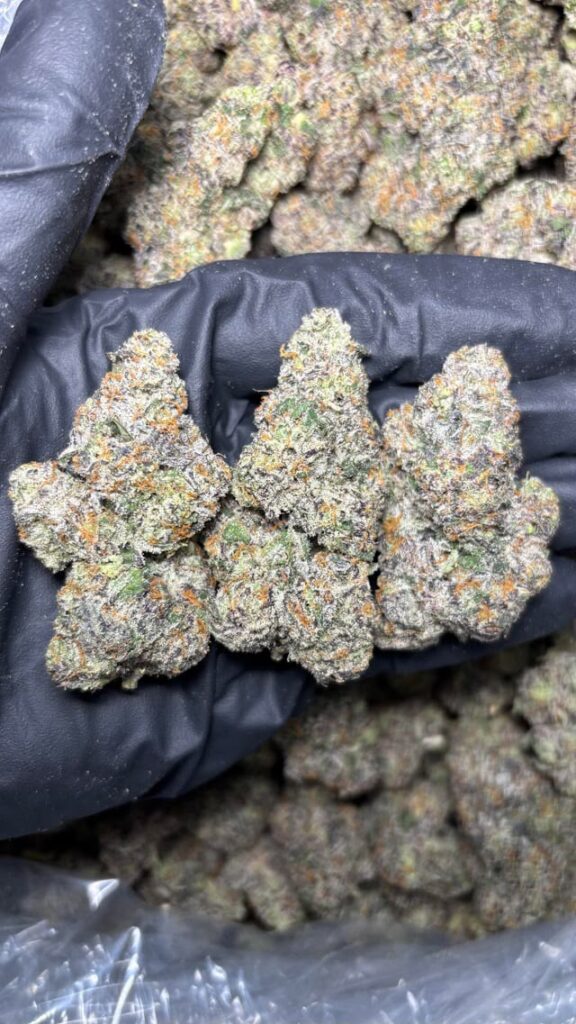
Before we go back in time, it helps to define the word everyone throws around. “Exotic” doesn’t have one official meaning in cannabis. It’s more of a feeling than a category. Generally, when growers and buyers say exotic, they mean flower with:
- Rare or hard-to-get genetics
- A complex terpene profile (not just “smells like weed”)
- Striking color and trichome coverage
- A story behind the breeding, not just a random name slapped on a bag
- A price tag that reflects all of the above
Standard commercial flower is grown for yield and consistency. Exotic flower is grown for flavor, visual appeal, and bragging rights. That difference in priorities is basically the whole history of this category in one sentence.
The Landrace Foundations: Before Exotic Was a Word 🗺️
Every hyped-up modern strain traces back to landrace genetics: plants that grew naturally in one region for generations before anyone crossed them with anything else. Durban Poison from South Africa. Thai and Chocolate Thai from Southeast Asia. Afghani and Hindu Kush from the mountains of Central Asia. Malawi Gold from East Africa.
These plants weren’t bred for flavor gimmicks. They adapted to their environment over hundreds of years, which is why they carry such different traits: Durban Poison is a fast-finishing, energizing sativa, while Afghani genetics run heavy, resin-soaked, and sedating. When breeders in the 1970s and 80s started bringing these plants out of their home regions and crossing them together, they created the first hybrids, and the raw material for everything that came after.
You can still find landrace-influenced strains showing up in the 2026 exotic market. Hemp Flower Co. notes that rare landrace genetics like Thai, Malawi Gold, and Colombian Gold are being bred into stable, modern THCA-compliant phenotypes, which shows this isn’t just nostalgia. Old genetics are getting a second life in a totally new legal and commercial context.
The OG Kush and Gas Era: Where “Gas” Actually Came From ⛽
If candy is one half of “candy gas,” gas is the other half, and it goes back further than most people think.
OG Kush is the strain most people point to as the start of the modern “gas” flavor category. Its exact background is debated, but most accounts trace it to a cross involving Chemdawg, Lemon Thai, and Pakistani Kush, brought into California in the early 1990s, according to a comparison piece from Weed.com. Chemdawg itself is where a lot of that sharp, fuel-like smell originated, and it later fed into Sour Diesel too.
That petroleum, skunky, solvent-like smell became a badge of quality in the 90s and early 2000s medical cannabis scene. If your flower smelled like gas, it usually meant it was strong and well-grown. That standard never really went away. It just got layered under sweeter flavors as breeding moved forward, which is exactly the blend you taste in a lot of today’s exotic strains.
The Cookies Revolution: How One Bay Area Strain Changed Everything 🍪
Fast forward to the late 2000s. A breeder known as Jigga (also known by his real name, Gilbert Anthony Milam Jr., aka Berner) crossed OG Kush with Durban Poison in California’s Bay Area. The result was Girl Scout Cookies, or GSC, and it changed the direction of the entire industry.
Accounts differ slightly on the exact parentage (some sources mention a specific Durban Poison variant called F1 Durban, and some rumors even bring Granddaddy Purple into the mix, according to Amsterdam Seed Center), but the core story holds up across every source: OG Kush’s heavy, gassy potency crossed with Durban Poison’s uplifting sativa energy.
What made Cookies different wasn’t just the genetics. It was the marketing. Berner built an actual brand around it, and the strain got name-dropped in music by Wiz Khalifa and others, according to KushKlub’s history piece. That’s a big deal, because it’s one of the first times a cannabis strain functioned like a consumer brand instead of just a plant with a name. Cookies Fam went on to become one of the most influential breeding collectives in the country, and nearly every strain in this article traces back to that lineage somewhere. 🎤
Sherbet, Gelato, and the Dessert Boom 🍨
Out of the Cookies family came Sunset Sherbet, and out of Sunset Sherbet (crossed with Thin Mint GSC) came Gelato. This is where cannabis breeding started leaning hard into dessert flavors on purpose.
Gelato was developed in San Francisco through a collaboration between Cookie Fam and Sherbinskis, according to a strain profile from Breeders Collective. It became the blueprint for the whole “sweet cream, dough, dessert” flavor family that still dominates dispensary menus today. Paradise Seeds points out something interesting here too: Gelato’s rise wasn’t just about genetics, it also lined up with a “designer cannabis” moment, where the strain got name-checked in songs by Calvin Harris, Aminé, and Gucci Mane, and Sherbinski even opened a retail store in Los Angeles in 2019 that leaned into fashion-brand style marketing.
This matters for the bigger picture, because it’s the moment cannabis strains started acting less like agricultural products and more like fashion labels. Limited drops. Brand loyalty. Hype around specific phenotypes like Gelato #33 and #41. That whole playbook came from here, and it set up exactly what would happen next.
Zkittlez and the Candy Takeover 🍬
While Gelato was building the creamy dessert side of things, a different strain was building the fruity candy side: Zkittlez.
Zkittlez was developed through collaborative work by Dying Breed Seeds, 3rd Gen Family, and Terp Hogz, according to Dark Coast Seed Co’s history piece, with roots tracing back to a Grape Ape and Grapefruit cross. It hit Northern California around the same time Gelato was taking off further south, and it brought something the industry didn’t have much of yet: a genuinely rainbow-candy smell, tropical and grape and citrus all at once, according to Rare Harvest’s breakdown of its genetics.
Zkittlez is the strain most directly responsible for the word “candy” showing up constantly in cannabis marketing after this point. Once breeders saw how much people loved that fruit-candy flavor, it became a target trait for almost every new cross that followed, including the one that would eventually break the internet.
Runtz: The Strain That Broke Instagram 📱
Here’s where things get interesting, because Runtz has one of the best documented origin stories in modern cannabis, and it happened surprisingly recently: 2017.
Runtz was bred in Los Angeles by two people known as Ray Bama and Nick, crossing Zkittlez with a Gelato #33 cut, according to Stoops NYC’s history piece. Nick was already growing indoor Zkittlez, which almost nobody had access to at the time, and he got his Gelato cut through Cookies’ Jai Chang, known as Jigga, tying this whole story back to the same Cookies Fam network again, according to Dark Coast Seed Co.
The name itself has a genuinely fun story. Ray Bama and Nick were trying to find a name that matched the fruity, candy smell of their new cross. They landed on Runts, the Nestle candy from the 1980s, and swapped the “s” for a “z” to match the Zkittlez spelling. Dark Coast Seed Co quotes the story as basically happening on a 15-minute car ride.
What happened after that is the part everyone remembers. Runtz spread through Instagram and hit that perfect storm: sweet flavor, dense frosty buds, deep purple coloring, and a name that was easy to remember and fun to say. A grower known as Nero pushed the White Runtz phenotype specifically and built a massive following (reportedly 220,000 Instagram followers before the account got shut down for cannabis content, per Dark Coast Seed Co) before Runtz crosses like White Runtz, Pink Runtz, Banana Runtz, and Apple Runtz all followed.
This is the moment exotic cannabis fully became a social media product. The strain’s popularity wasn’t just about how it smoked. It was about how it looked in a photo, and that shift changed how every breeder afterward thought about marketing a new cross.
Enter Candy Gas: When Candy Met Gas 🍬⛽
Which brings us to the candy gas strain, and this is where the two threads of this whole history (the sweet dessert-candy side, and the old-school gas side) finally get treated as a single flavor identity instead of opposites.
Here’s the thing about candy gas: it’s not always one fixed genetic line. Different sources trace it different ways. Weedmaps and Leafly note that one commonly cited version comes from Crockett Family Farms, crossing Kandy Kush with OG #18. But SeedsHereNow and GrowDiaries point to a different version bred by Grounded Genetics, crossing Gelato 41 with Runtz, and another source, High There, describes a version built from Zkittlez crossed with Mendo Breath and Jet Fuel Gelato.
That might sound messy, but it actually tells you something important. A detailed guide from Herb puts it well: “gas” was never really one strain to begin with. It’s a flavor category that traces back to Sour Diesel, ChemDog, and OG Kush, all prized for that pungent, fuel-like punch. Candy gas takes that gassy foundation and layers sweet, fruity, dessert genetics on top of it (usually pulling from the Runtz, Gelato, and Zkittlez family we just walked through).
So when you see “candy gas” on a menu, you’re not necessarily looking at one exact cross. You’re looking at a style: sweet on the inhale, fuel on the exhale. JointCommerce’s breeding breakdown explains this really well, noting that the candy side usually tracks to terpenes like limonene, linalool, and ocimene, while the gas side comes from caryophyllene-heavy, OG-adjacent genetics along with trace sulfur compounds that show up during curing.
What’s cool about this is that it’s basically the entire history of exotic cannabis compressed into one strain name. You’ve got the 1990s gas lineage (OG Kush, Chemdawg, Sour Diesel) meeting the 2010s dessert-candy lineage (Gelato, Zkittlez, Runtz), and the result is a flavor profile that captures both eras at once. 🌌 For a deeper breakdown of the terpenes, effects, and grow specifics behind this specific strain, that’s really its own article, but for the history side, this is the short version: candy gas isn’t a trend that came from nowhere. It’s the logical next step of everything that came before it.
Why Exotic Strains Got So Expensive 💰
If you’ve noticed exotic flower costs way more than regular dispensary shelf weed, there’s a real reason for that, and it’s not just marketing.
Breeding a stable, good-tasting hybrid takes years, not weeks. Breeders run what’s called a “pheno hunt,” growing out dozens or even hundreds of seeds from the same cross to find the one or two plants (phenotypes) that actually nail the flavor, structure, and effect they’re after. Most of those plants get thrown out. Only the best ones get kept and cloned forward.
That process costs real money and real time, and it only gets more expensive when you add:
- Small batch sizes (boutique breeders aren’t optimizing for yield)
- Indoor growing costs (climate control, lighting, labor)
- Limited-drop scarcity (some strains only get grown once or twice a year)
- Brand and reputation (a known breeder’s cut sells for more than an unknown copy of the same genetics)
According to Hemp Flower Co’s 2026 industry report, limited-release exotic strains often sell out within days despite premium pricing running 50 to 80 percent above standard strains. That’s not accidental scarcity either. It reflects genuine collector-culture demand that built up over the last decade of this history we just went through.
The Genetics Behind the Hype: How Breeders Actually Build These Strains 🧬
It’s worth taking a second to explain how this breeding process actually works, since it explains why some strains taste amazing and others (with the exact same parent names) taste completely flat.
Two strains can share a name and still be genetically different, because “genetics” in cannabis usually means “a specific cross,” not “an exact, identical plant.” When a breeder crosses Strain A with Strain B, the seeds produced aren’t clones. Each seed is its own unique combination of both parents’ DNA, which is why pheno hunting matters so much. Out of 50 seeds from the same Gelato x Zkittlez cross, you might get five that taste incredible and forty-five that taste mediocre.
Once a breeder finds a phenotype worth keeping, they clone it (cutting and rooting a piece of the plant) rather than growing it from seed again, since clones are genetically identical to the original plant. That’s why a specific “cut” (like a particular Gelato #41 cut, or a specific Runtz cut) becomes valuable on its own, separate from the strain name. This is also exactly why you’ll see disputes over a strain’s true origin, like the Crockett Family Farms versus Grounded Genetics disagreement over candy gas. Multiple breeders can independently land on genetically similar results just by crossing similar parent lines, without ever copying each other directly.
Exotic Cannabis in 2026: Where the Category Is Now 🚀
So where does all this history leave us today? In a pretty wild spot, honestly.
The biggest shift right now is the growth of THCA hemp flower, a legal category (under current Farm Bill rules) that lets exotic-style genetics get sold across state lines in a way traditional dispensary cannabis can’t. According to BioWellnessX’s 2026 guide, exotic THCA flower has become known for unconventional colors like deep purple and electric orange, plus aromas ranging from tropical fruit to creamy dessert, basically the entire flavor history we just covered, now sold as a legal hemp product.
Current top strains getting attention in 2026 read like a highlight reel of everything in this article: Blue Zushi, Permanent Marker, Super Boof, and Blue Runtz are all getting called out in coverage from Vertex Exotics and THCa By Mail. NUG Magazine’s July 2026 roundup also points out that the appeal of exotic indoor strains keeps coming back to the same rare terpenes we’ve talked about this whole time: linalool, caryophyllene, and limonene.
There’s also a real return to landrace genetics happening, with breeders stabilizing old-school Thai, Malawi Gold, and Colombian Gold lines into modern, testable phenotypes. It’s a neat full-circle moment. The plants that started this whole story 50 years ago are showing back up as the newest thing in 2026.
What This History Means If You’re Buying or Growing Today 🔍
Here’s the practical takeaway from all of this. Knowing the history isn’t just trivia, it actually helps you shop smarter.
When you’re buying: A strain’s lineage tells you what to expect before you even open the jar. If it traces back to the OG Kush and Chemdawg gas lineage, expect that heavier, fuel-forward smell. If it traces back to Zkittlez and Gelato, expect sweetness and dessert notes. Most modern exotic strains, including candy gas strains, blend both, so check the lab sheet for terpene percentages, not just THC. A strain sitting at 2 percent or more total terpenes is going to deliver a much more layered experience than one barely breaking 1 percent, no matter how high the THC number looks.
When you’re growing: Understanding that a strain name doesn’t guarantee a specific plant matters a lot. If you’re buying seeds or clones, know your source. A “Runtz” or “Gelato” cut from a reputable, known lineage is going to behave very differently than a random seed with the same name from an unverified source.
When you’re just curious: This whole category exists because people kept chasing better flavor, one generation at a time. Durban Poison and Afghani gave us the raw material. OG Kush and Chemdawg gave us gas. Cookies gave us the dessert direction and the branding playbook. Gelato and Zkittlez split into cream and candy. Runtz fused fruit and cream into an Instagram phenomenon. And candy gas took the sweetness of that whole modern era and reconnected it back to the fuel-forward roots where “exotic” started getting serious in the first place.
Quick Questions About Exotic Cannabis Strain History ❓
What does “exotic” mean in cannabis?
It’s not an official category. It generally refers to flower with rare genetics, a complex terpene profile, striking appearance, and a real breeding story behind it, as opposed to standard commercial weed grown mainly for yield.
Where did the “gas” smell in cannabis come from?
It traces back to OG Kush, Chemdawg, and Sour Diesel, all popularized in California in the 1990s for their sharp, fuel-like, skunky smell.
Is candy gas one specific strain?
Not exactly. It’s often used as a flavor category as much as a strain name, though specific crosses (like Kandy Kush x OG #18, or Gelato 41 x Runtz) are commonly cited as candy gas strains.
What strain started the modern “dessert flavor” trend?
Girl Scout Cookies (GSC), bred by Jigga (Berner) in California’s Bay Area in the late 2000s, is generally credited as the strain that kicked off this direction, with Gelato and Sunset Sherbet following directly from it.
When did Runtz get created?
2017, in Los Angeles, bred by Ray Bama and Nick from a cross of Zkittlez and Gelato.
Exotic cannabis strains didn’t happen overnight, and they didn’t happen by accident either. Every jar of candy gas strain flower on a shelf right now is carrying about three decades of breeding history in it, from a landrace plant growing wild somewhere, all the way to a 15-minute car ride in LA where somebody swapped an “s” for a “z.” That’s a pretty good story for something you’re about to roll into a joint. 🌿
